 I bet you clicked this email because the subject line ticked you off! Twenty years ago, it would have ticked me off too. However, I hope to move you in the direction of accepting this as true because it has great bearing on what we have been discussing for the last two weeks.
We have talked about how our perception of what is happening fuels our emotions and leads to a response either positive or negative. We have also looked at seven tips to help you learn to control your responses when things go wrong. However, you have to believe that controlling your response is even possible.
How I Learned to Take Control
When I was a young mom, I was prone to exploding/raging on a regular basis. I am not proud of this fact and it took me quite a few years to come to the realization that exploding/raging was not only ineffective when dealing with my husband and children but that it was detrimental to healthy family relationships. You see I came from a family of exploders. It’s what we did, how we dealt with disappointment, sorrow, frustration, etc.
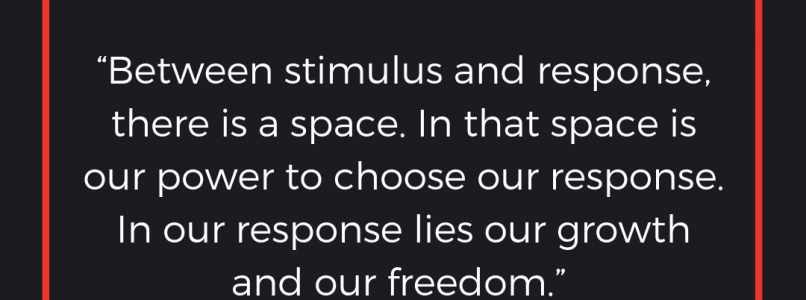
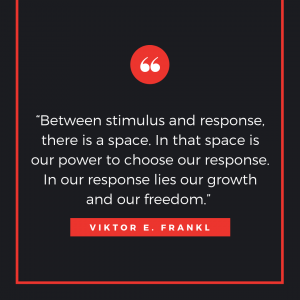
Eventually, I did begin to see that exploding/raging was counter-productive and that it never resolved whatever it was that was causing me to explode/rage in the first place. But I couldn’t see how I could ever stop this behavior because it was so immediate. I mean there would be a stimulus of some kind and then an explosion. There wasn’t even an opportunity to not explode/rage.
However, as the years went by, I began to learn more about stimulus and response and I realized that there was a moment of choice. It took me a long time to accept this because if it was true then I could choose to not explode/rage. It made me responsible for what I did and took the responsibility away from the circumstance or another person. It made me 100% in control of my response.
That was intimidating! It felt like a huge and burdensome responsibility.
One thing I learned and began to believe in fully was that there was a space between stimulus and response, no matter how small. When I had accepted this as true I was able to move to the next step: believing that I had the power to increase this space.
The first thing I did was begin to analyze what happened after each explosion. What triggered it? What was my perception of what was happening? Was I blaming anyone or anything? What was I really feeling because I knew that anger is always a secondary emotion? Was I disappointed, embarrassed, feeling disrespected, what?
Looking carefully at what caused me to explode was helpful.
It didn’t take long for me to begin to be able to see in my mind what was happening. I could see the trigger and then see the explosion and in between, I felt a tiny space for choice. I also began to see that I chose to explode. It’s hard to put this into words but I think if you’re a person who lets your response get out of control you will know what I’m talking about.
Next, I stopped beating myself up when I behaved inappropriately, and I just looked at what had happened. I gave myself credit for wanting to do better, to be better.
As I did this, I began to feel hopeful that yes, I could take control of my responses. I began to feel the space between stimulus and response get larger, I could feel myself making the decision to explode. Rather than feeling badly about this I allowed myself to celebrate that I could see myself choose. This made it possible, over time, to begin making a different choice.
Eventually, I stopped exploding/raging. I rarely do it anymore. I still see the space in most situations and I feel myself choose.
A couple of weeks ago I told you about my husband and my good sewing scissors. What I didn’t reveal in that story was that when I picked up the scissors, I felt the space for choice and I saw myself choose to be angry. Then I marched into the house and confronted my husband. I didn’t explode/rage as in the old days, but I was clearly annoyed with him.
As I walked away from him after my harsh words, I felt myself in that space between stimulus and response and I knew that I wanted to remain angry at him. So, I came to a dead stop in the middle of my kitchen and asked myself, “What are you really feeling.”
Here it is in a nutshell. I was frustrated that the office wasn’t finished. I was feeling anxious because the weather was changing and all my office stuff was under a tarp on the patio. I was weary of controlling my anxiousness because this part of my life was out of order.
Then I did what I have practiced for years now, I chose to let go of my desire to remain angry and I smiled. Smiling releases endorphins and even if the smile isn’t genuine it changes how you feel. I was able to pull myself together, apologize to my husband and talk about what was really going on.
Exploding/raging or even being angry, no matter the underlying cause, is always a choice. You are 100% in control of how your life looks. If you feel like you have no control, I promise that when you accept this you plant your feet on the path to control. As you increase the space between stimulus and response you will find a sense of freedom and you will be happier!
Nine Steps to Increasing Your Ability to Choose
Let’s put the steps I took to increase the space between stimulus and response into order:
1. Believe that there is a space between a stimulus and your response and that no matter how small it is now it can be increased
2. Believe that it is in your power to increase your space for choice no matter how poorly you are doing at present
3. Understand that when you take 100% responsibility for your life and your responses it is not burdensome but is the most freeing thing you will ever do!
4. Once you have these beliefs planted in your mind, begin analyzing every time you respond inappropriately. What were the real reasons? What triggered it? What was your perception of what was happening? Were you blaming anyone or anything? Be honest.
5. Never berate yourself for falling back into the old behavior. I gave myself credit for wanting to do better, to be better. It’s a wonderful thing to come to know where you are in error and then taking steps to change, no matter how long it actually takes to change. Celebrate that!
6. Begin to mentally see the space between the stimulus/trigger and your response. Mentally see it enlarging. If you are a praying person I have found this to be invaluable in assisting me to see in my mind this enlarging of the space for choice.
7. Avoid discouragement. This isn’t an easy or quick process for most of us but it is doable over time. How long did it take me to stop exploding/raging? Ten Years!
8. Never quit. Keep seeing. Keep analyzing. Hold on to the belief that you can choose anger or not.
9. Remember that small and simple things done consistently over time bring the desired results.
Your shares are the best compliment.

 her she said that she was having tons of visits and treats but that her family could use some nurturing. Hence one apple pie.
 Saturday morning our church planned a Christmas breakfast. That’s right, breakfast. I would have opted to take a breakfast casserole, but my husband has a family tradition of Green Chili Pancakes and it’s so unique that he really wanted to share
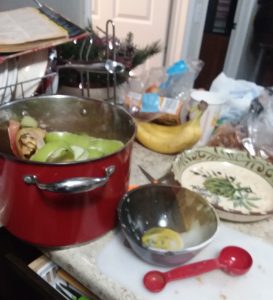
  it. The problem is, he doesn’t know how to make it, I do. His grannie taught me. : ) So I needed to make 50 pancakes and then a huge pot of the green chili sauce. It was too much to do Saturday morning, so it had to be done on Friday. This is very delicious by the way.
  Long story. And I also realized that I needed a formatted document to include with a special framed family genealogy chart we are sending to our children. We are direct descendants of William Brewster of the Mayflower and I wanted to help each family understand who he was, what his family was like, and why they came to America.
 It’s Saturday morning now. The church breakfast is done. The chili pancakes were a success. Everyone loved the pies which have been eaten and I am heading off to do the tent kit and get the rest of the stuff wrapped and shipped. My house is a disaster and the kitchen cabinets can’t even be seen. I haven’t vacuumed, dusted, or cleaned anything. Laundry is piling up but I did get one load in before the breakfast. Another big woohoo!



 A Very Bright Chicken!
 We have chickens, free-range chickens. That means they are never locked in the coop. That has its advantages and disadvantages!
 she gets in I watched her. Within minutes I saw her scoot under the fence at the corner where it connects to our neighbor’s fence. I shooed her back out. Then I placed a large rock in front of the low spot.
 After I blocked her newest entrance I watched her pace from one end of the garden to the other looking for a way in. I could feel her frustration as she paced back and forth trying this and that.
 she went back to pacing the fence line, then she veered to the left towards the pasture fence. The fence at the back of the garden is also the fence to the back pasture. It’s made of far different wire than our chicken wire garden fence.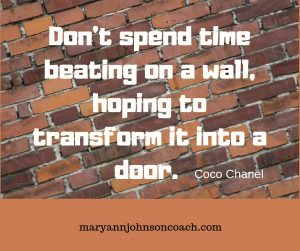


 gets cold but every sip tells her mind – you matter and I am taking care of you!
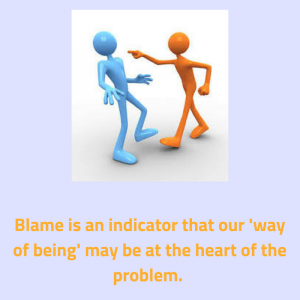 Have you ever noticed that when we’re having trouble with our spouse, neighbor or our children we begin to wonder what we can “do” to make the situation better? Can we devise a new system, have a good old-fashioned “talk it out” session or come up with a consequence/reward and so forth.
 This good, loving mother shared with me that her son is needy, sometimes whiny, and doesn’t respond when asked to do something. He doesn’t like being directed. It’s frankly annoying. The energy between them is not positive and she is short with him.
 works PERFECTLY. When she gives him a heads up about a change in the schedule it works PERFECTLY. And as for random touches….well that is making ALL the difference. Not just for her seven-year-old, but for all of her children.

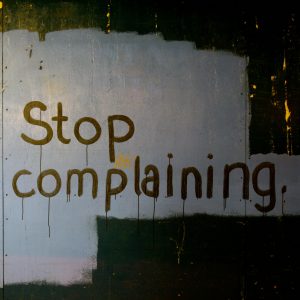 God must have wanted to see how serious I was about the question because I prayed that same prayer every day for three months! Then one night I knew the answer – stop complaining!
 made a serious decision to become a more charitable person, less judgmental. That has been a work in progress too. Here is how they’re connected.