

 What if you went Screen-Free, as a family, for a WHOLE MONTH!! Do you think you could do it? Would your family go nuts? Would everyone crack up? Would the fighting increase? Yikes!! A whole month!!
One of the main tips I give to help families connect better and more often, is to manage technology better. Turn off your digital devices, ditch technology – just for a while. Have technology free moments every day. For example, you could have a TV, computer and no phone hour just before bed. When you’re willing to let go of technology for even short amounts of time you will be surprised at how much time you can open up for your family. Finding a few moments each day to turn technology off is a good idea.
A few years ago, I met a family that goes screen-free for a whole month, once a year. I got all the details from the mom, Courtney, and I want to share them with you because I think you will be so impressed that you might consider making this a tradition in your home.
So, what is screen-free you ask? No TV, no movies on TV, no computer time, no games on the phone or TV, no screens!
HOW TO MAKE GOING SCREEN-FREE WORK
Here is how the Smith family makes it work:
1. Prepare your kids ahead of time. This family goes screen free in June, every year. However, one year they didn’t begin talking about it early enough. They usually begin talking about it and making plans about a month in advance. So, for the sake of having a successful Screen-Free Month, they moved it to July that year.
2. Presentation is everything. That’s my phrase and you’ve probably heard me say it before, but it is what they do. They talk it up. They talk about all the great things they’re going to be able to do as a family, how much fun they’re going to have together, and the family reward at the end of the month.
3. Get everyone to buy in. As Courtney was telling me how they get their kids to cooperate I said, “Oh you get them to buy in.” She smiled and said, “Well I didn’t have a term for it but yup, that’s what we do.” They get their kids to buy in by allowing them to pick a reward they would like to have at the end of the month. It could be swimming, camping, eating out, going to the movie theater, visiting grandparents, a road trip, whatever the parents want to throw out there. When the kids pick it, plan it and talk about it – they are IN.
Here is their families one caveat concerning rewards – They don’t use screen time as the reward. They don’t want to reward ‘no screen’ time with ‘screen’ time. : )
4. Parent’s have to be honest! It isn’t the kids who struggle the most, it’s the parents. They really do have to commit. Courtney told me that the hard part for her is at lunch. She usually has lunch when the big kids are at school and her little one is taking a nap. She likes to read Facebook, watch a show, catch up on the news, whatever, as she eats lunch. It’s a challenge to read instead or call a friend.
It is also challenging for her and her husband in the evening when everyone is in bed. They usually veg out a bit in front of the TV, just the two of them but – YIKES – it’s their screen-free month. She told me that they have learned to play games together or read to each other. It’s become really fun.
The one adult caveat – They do occasionally check email, pay bills online or prepare church lessons. Just no screens for entertainment purposes.
5. Plan ahead. Get the games out. Check some great books out of the library. Stock up on popcorn. Know in your mind what you’re going to say to your kids, how are you going to direct them when they come and ask to watch a movie or use technology. Get mentally and physically prepared.
This family goes screen free in the summer months because they feel that in the winter you’re shut in and it’s more difficult to disengage from TV, videos, games, etc. In the summer you can get out, walk, go swimming, go to the mountains, etc.
THE RESULTS
Courtney said that it’s challenging the first few days because it’s a serious transition, but then they settle right in. They have a lot of fun. They play together, they talk, and they laugh. She said that it’s something they all really look forward to each year.
They feel more connected at the end of their Screen-Free Month. It takes a while for screen time to become important to them again. The break feels good – after the first few days. : )
In fact, Courtney shared this with me, “Last time we did it our kids wanted to continue for more than a month! And they hardly ever asked when it would be over.”
So why not consider it and give it a try. You just might find out how much your family likes to read, play games, hike or swim.
Who else out there goes screen free for a day, a week, a month? What is your experience?

 I got a fabulous call recently from a dear friend. She wanted to tell me about her three grandchildren, twins, aged 8 and one, aged 5. They have been playing a game with their grandma when she takes them to school 3 times a week. It’s called, Embellish the Story. One of them begins the story and then they each take a turn adding to it. In other words, they embellish it.
 I love to write but don’t always want to prepare and post a new article every week. I enjoy posting something of value every day on Facebook but sometimes I would rather do other things. However, I do both as perfectly as I can because I have a goal and to reach it, I have learned that there must be consistency in my effort, for as long as it takes.
 important in parenting because it nearly always takes until a child leaves home and creates their own life to see the results of our efforts. While they’re growing, it’s tempting to let ourselves feel failure because we don’t see our child as neat, quiet, mannerly and so forth. We often see a mud-covered child, a snitched cookie behind a back, spilled milk on the kitchen floor, or we hear voices’ complaining that it’s not their fault or “it’s my turn.”
 play, answering their questions or listening to them as they verbalize their thoughts sometimes seem like a poor use of our finite time. Don’t we love our children? Don’t we have a vision of the warm and gentle family atmosphere we want to create? Of course, we do but
  and it can take as little as three minutes or less. When we’re Present we send the clear message that we see them, we hear them, and that they matter. This is why learning to put down our ‘stuff’ and giving moments of Presence to our children matters so much.
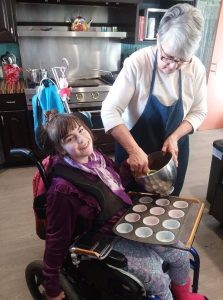 Recently, I posted a photo on Facebook of my twelve-year-old granddaughter making cupcakes. She has cerebral palsy and so it requires some special accommodation to cook with her. We’ve been cooking together now, for many years.
 3-18-2010
 and the chair on the table. Jack, of course, took his position on one of the kitchen chairs.
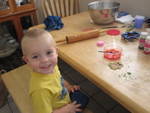 Next came the eggs. I showed Jack and Maggie how to break one and get the contents out. Woohoo!! Whacking eggs suited Jack just fine. He gave it a whack and voila! egg all over the table. Not to worry. We just picked out the eggshells and scraped the egg into the bowl. Good thing we started with a clean table.
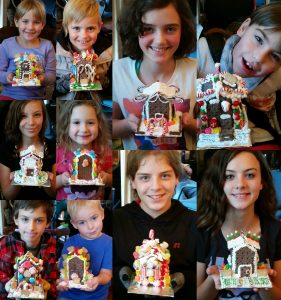 I could help 25-30 kids by myself. But I’m going to be honest here. It went so smoothly because the project was about me and not about the children.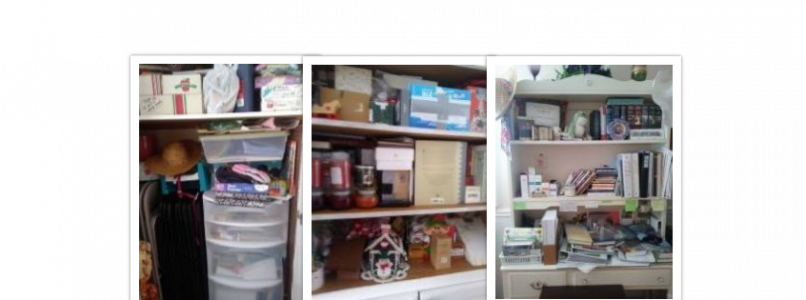
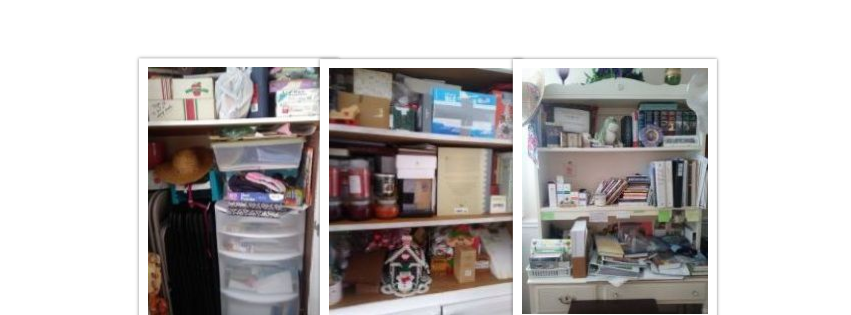 Recently, while at a friend’s home, she talked to me about the challenge of managing all the stuff in her home. Now let me clearly state that her home is clean and orderly. She isn’t having a problem with clutter or mess. But she has accumulated a lot of stuff over the years.
 Los Angeles families and found all the mothers’ stress hormones spiked during the time they spent dealing with their household paraphernalia (Arnold, et al, Life at Home in the Twenty-First Century).




 Dad: I’m reading a book Called Lord of the Flies. I don’t like the story very much. It’s sad.


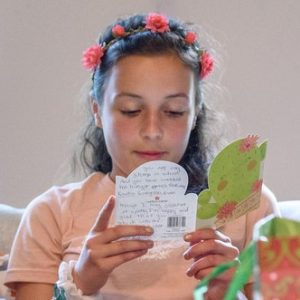 tape a piece of gum. On a birthday I may add a couple of dollars. That’s all. Years ago, as a family, we determined that we would not spend lots of money on gifts for either birthdays or holidays. We have all stuck with that intention. However, my grandchildren have other grandparents who send cool gifts in the mail. I worried about that. But I didn’t need to.
 In honor of the Great American Pie Month, I want to share a story that illustrates the difference between kids and adults. Understanding this can make all the difference in how much you enjoy being and working with them and it can also impact your enjoyment whenever you learn something new.