Tag: control your thoughts

Want Better Relationships – Like Yourself First!

I keep thinking that I’ll switch topics from the power of controlling our story and response to another parenting topic but every day provides a new and powerful example of just what it looks like to control how we think and act.

Stories of real-life examples are impactful in helping us relate to principles in a way that allows us to get clarity on how to live them better. There’s value in ‘seeing’ a principle at work because it extends our knowledge of the principle and knowledge is power when it comes to personal change.

Here is an example from this week.

When I was writing the book Becoming a Present Parent I found myself constantly distracted and it was hard to make headway. So I pondered what I could do to find more consistent time to write. My most clear and compelling thought was to get up at four in the morning which would give me three uninterrupted hours. It was one of the most challenging and rewarding things I have ever set out to do. For over six months I got up early six days a week and wrote. It was exhilarating to see the book come together.

That was over 1 ½ years ago and a recent move. I have got to confess that I fell off that wagon and I’ve struggled to get back on. I’ve been making an effort to go back to my early morning routine because I have some studying to do that is kicking my rear and I need more quiet, focused time.

Each day since I determined to get up at four a.m. I have awakened to the alarm and then changed the time to 5:30 or 6. Of course, I want to get up, I know I should get up but when it comes to getting up I have an argument with myself and I lose. Here’s the story I’ve been telling myself about the situation: I’m just rebellious. I know I should get up but I just don’t want to. I’m being a lazy lump!”

On Monday I told my daughter how I was feeling. She replied, “Well mom, maybe you’re just being charitable to yourself. We’ve just moved, have been renovating every day and you are tired. Maybe you’re just listening to your body and taking care of yourself.” Wow, that felt a lot better than the story I’d been telling myself.

On Wednesday I helped my 95-year-old friend in her yard. It was laborious, to say the least. My back was sore and so were my legs. I felt very weary. In fact, I went to bed at 8:30.

Now, from 8:30 to 4:30 is eight hours, the amount of time I feel I need and want to sleep each night. But when the alarm went off I was still TIRED. I wanted to lie there and rest a bit more. So I did. The difference was this: I thought it over and made a decision. I didn’t argue with myself or feel like a lazy lump. I just decided to give myself an extra hour of sleep.

I know I need to get up at 4:00. I feel very strongly about that and I will. But while I’m getting back into the traces, so to speak, I’m going to be kinder to myself. I’m going to be more generous with the story I tell myself about the process I have to go through to make it happen.

Remember last week? I shared the idea that when we think positively about any given situation it increases our ability to come up with options for moving forward. With this in mind, I know that as I remain positive, continue in my efforts to accomplish a challenging goal and don’t quit, I will succeed more quickly.

The story we tell ourselves about ourselves, others or situations impacts how we feel and then respond. Getting control over our story and the ensuing response gives us greater power over our lives. It’s worth the effort!

If you want to begin taking control of your story, then I want to help you. I have an exercise that I want to share with you, FREE. It’s a simple PDF which will walk you through a 30-day exercise that will help you see patterns in your negative thoughts and will give you clarity on what you need to work on first. If you’re interested then click here. It will be available for download for one week.

I’d like to know what you’re struggling with right now and how changing your story could help you have a better outcome. Please leave a comment. I will respond. : )

Here’s to more joy,
Mary Ann

P.S. You can learn more about controlling your thoughts and emotions for better family relationships in my new book Becoming a Present Parent, Connecting With Your Children in Five Minutes or Less. You can also receive a chapter from the book on Touchpoints, creating points of connection rather than having points of contention, FREE by visiting becomingapresentparent.com It can be life-changing for your family. I promise!

Want to know more about Present Parenting? –
Want More Internal Resources When Dealing With Your Kids?

For the last few weeks, I have been sharing information on the value of seeing situations in our lives in a more positive light. It requires that we let go of blame, fear, anger and so forth. But that takes some practice. So why would we even want to do it?

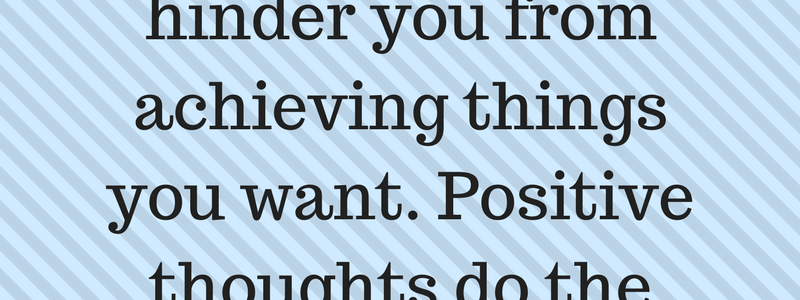
Negative thoughts hinder you from achieving things you want but research has shown that positive thoughts do the opposite.

Barbara Fredrickson is a positive psychology researcher at the University of North Carolina. She’s been able to demonstrate that positive thoughts can create real value in your life. She took five groups of people and showed each group film clips. Two groups saw clips of joyful things or sights that engendered contentment. Two groups saw clips which brought forth feeling of fear or anger. The control group saw neutral images.

Afterward, each participant was asked to imagine themselves in a situation where similar feelings would arise and to write down what they would do.

Participants who saw images of fear and anger wrote down the fewest responses. Meanwhile, the participants who saw images of joy and contentment wrote down a significantly higher number of actions that they would take, even when compared to the neutral group.

In other words, when you’re experiencing positive emotions like joy, contentment, and love you’ll see more possibilities in your life. Your thoughts will be more positive. That means the truths you embrace or the stories you tell yourself will be more positive. That will help you see more options for response.

I was mentoring a self-employed mother who was telling herself a negative story about her son’s actions. She felt he was whiny and needy. He was a bother when she was trying to work. Her responses to her son were causing a strained relationship between them. She was having difficulty figuring out how to fix the situation.

Here’s what happened when she began telling herself a more positive story. When I asked her to tell me more about her son, she replied that he was bright, loving, and responsible. So she decided to remind herself of these qualities each time she began to experience annoyance or frustration rather than think about his whining.

When I talked with her next, I asked her how it was going. She replied she and her son were no longer at odds. She enjoyed his company. She could see that he was just interested in what she was doing, and they had had opportunities to connect on and off during the day. She was able to respond positively to him more often. She was able to be Present more frequently.

When her story was negative, she had fewer ideas on how she could deal with the situation in positive ways and, in fact, dealt with her son in more negative ways. This set up a negative cycle between them.

Her son tried harder to be heard and seen, her annoyance was heightened, and she responded in more negative ways. Her son would try even harder to be heard and seen, and the cycle would repeat.

When she changed her story and generated more positive feelings, she found more creative ways to respond. The new responses changed the dynamic or cycle with her son. This mom got better results because her feelings were positive. Her feelings were positive because she changed her story about her son. She found ways to be Present despite her work or his needs.

Remember that every situation and experience is made up of multiple truths. When we choose to focus on the more positive aspects of what happens in our lives we will be able to be Present more often and more consistently which will help us have happier family experiences. That’s why it’s worth the work and practice to take control of our thoughts, feelings, and the resulting stories. We will be able to respond better, even in negative situations. And that will get us a better result!

Have you had an experience where changing your story about a person or situation has changed your ability to respond well? Man, I really want to hear about it! Please share in the comments section.

Here’s to more joy,
Mary Ann

P.S. You can learn more about controlling your thoughts and emotions for better family relationships in my new book Becoming a Present Parent, Connecting With Your Children in Five Minutes or Less. You can also receive a chapter from the book on Touchpoints, creating points of connection rather than having points of contention, FREE by visiting becomingapresentparent.com It can be life-changing for your family. I promise!

React or Respond. We decide!

For the last two weeks, I have been writing about families and how we respond to one another.  I wrote that how we chose to see what happens to us can and does impact how we deal with difficult circumstances.

Our brains are wired to create a story around all of our experiences. It all begins with a thought. Once we have a thought, if we hold it in our minds, it becomes a story because our brain does its job and goes to the files and finds evidence that our thought is correct; usually, evidence based on past experiences. This process takes fractions of seconds.

Once we have our story, feelings are generated. These feelings move us to an action or response. Our response produces a result, either good or bad. This little scenario repeats itself hundreds of times each day. The better the response the better the result. We can’t run away from this principle. We live it out whether we understand and accept it or not.

Today I want to illustrate how our story can impact our response.

My husband Don is a gadget man. One fall he bought a new stove top grill at the county fair and was excited to use it. The next morning was Sunday, and we needed to get to a very important reception right after church. I said to Don, “Honey, there isn’t time to grill chicken today and make it to the reception. You’ll have to grill chicken tomorrow.”

After church, Don was nowhere to be seen. I surmised he had left early to go home and grill chicken! Sure enough, when I got home the grill was on and he was cooking. We were going to be late for the reception!

When we got to the reception, they were cleaning up. The bride and groom had left.  I was so angry!

Here was my heat of the moment story—“There are only two reasons Don would have done this. Either he didn’t hear a word I said because he doesn’t listen to me, or he didn’t care what I said.”

I was practiced at controlling my thoughts by now, and I knew this particular story was about blame and would color our relationship for weeks. Not appealing at all. So I looked for a new story. “I know Don. He loves me. He isn’t insensitive. There must be another reason he went ahead and grilled that chicken.”

Later in the evening I calmly said, “Don, remember when I said there wasn’t time to grill chicken today. I can see two reasons why you went ahead and did it. Either you didn’t hear what I said this morning, or you didn’t care what I wanted. But I know you, and you love me. You’re not insensitive. So there must be a reason I haven’t thought of.”

He looked at me with a stricken face and replied, “Gosh Mary, I thought I could do it in time. I thought the whole thing would take thirty minutes. I didn’t know it would take so long.”

I had to laugh because I could tell from his poor face he had really believed it would only take thirty minutes and was shocked to find out it wasn’t true. He never intended to ignore me or hurt me or make us late. He didn’t plan anything of the kind. He was moving forward based on an unrealistic expectation.

I was able to revise my story, even in the heat of the moment, because I took responsibility. I stopped blaming. I could see my story was the issue, not Don’s actions.

When I changed from a blaming, negative story to a more positive story I was able to come up with a plan for moving forward that got me a really good result. When we take responsibility for what we think and how it makes us feel we will be able to respond to negative situations better. That will have a VERY positive and connecting impact on our families.

What has been your experience with taking control of what you think and feel? Please share in the comments section.

Here’s to more joy,
Mary Ann

P.S. You can learn more about controlling your thoughts and emotions for better family relationships in my new book Becoming a Present Parent, Connecting With Your Children in Five Minutes or Less.  You can also receive a chapter from the book on Touchpoints, creating points of connection rather than having points of contention, FREE by visiting becomingapresentparent.com  It can be life changing for your family. I promise!

If you liked this article and found it useful please share.