

Category: Principles

Practicing Calm — Holding the Chaos A Series: Part 5

Long ago, after a day that started at 7:00 in the morning and didn’t end until 1:30 a.m. the next day, my daughter, Jodie, said, “Mom, it’s probably a real blessing that you have the grandkids so much. It gives you lots of material for your writing.” LOL


We were preparing to teach a room full of sixth graders how to make gingerbread houses out of graham crackers. It took over ten hours of preparation. It was a gift to the kids for a fundraiser they’d put together to help with my granddaughter Maggie’s therapy.

However, a big project doesn’t pause the rest of life. Maggie still needed her therapy session that day. The other grandchildren needed care. Meals had to be cooked. After a mentoring session with a family I was helping, Jodie and her kids arrived around noon. We began cutting crackers and bagging candy, while fielding questions, settling squabbles, keeping the littlest one out of the tree in the yard, getting drinks, nursing a baby, changing diapers, etc. You know how it goes.

After several hours of work, Jodie left to take Maggie to her therapy appointment. I kept going. When the therapy session ended, Jodie came back, and we worked together for a while longer, since she had an evening planned with friends, a plan made before the gingerbread project came up. When it was time, Jodie left for her party, and the grandchildren stayed the night with Don and me. He helped me cut cardboard bases, and once we’d stopped to feed everyone, he kept the kids occupied so I could keep working. At 6:00 p.m., I was still cutting crackers.

The Edge

By 8:00, our nursing granddaughter was at the end of her rope. She would crawl into the kitchen and pull herself up on the backs of my legs, then tumble down when I moved to catch her, which hurt her feelings every time, and she would cry. Our grandson was riding an adrenaline wave, wild the way kids get when it’s time for bed and they’re exhausted but refuse to admit it.

I kept watching the clock. I still had four or five hours of prep left. Seven batches of frosting to make. Eighty-seven pastry bags to fill. The stress was climbing. I picked up the baby once more, walked out of the kitchen, and felt an overwhelming urge to scream. Not at anyone. Just scream.

I hadn’t felt that in over fifteen years. It had been so long I’d nearly forgotten what it felt like to have little kids all day long. Years earlier, I would have screamed, yelling at kids, my husband, whoever was nearby. But that night, I swallowed it down and did what I’d learned to do instead. I looked at those sweet, tired children, and I stopped.

Choosing Calm

I sat on the couch with baby Mary and gave her a bottle. I talked with little Jack, sat with Maggie, and let go of the feeling that time was running out and the world would fall apart if I didn’t move faster. You know what happened? Baby Mary calmed down. Jack calmed down. Maggie started laughing. I felt peace settle back into the room. Why hadn’t I done this earlier, before I needed to scream?

It was a long night. Jodie returned after her party, and we finished at 1:30 in the morning. It had been a challenging day, but we got through it. The children were happy for the most part. I remained calm, if frazzled, and nobody yelled.

When life feels as if it’s spinning, the answer isn’t to run from the chaos. It’s to sit down in the middle of it, hold whoever needs holding, listen, breathe, and let go of the fires you think you must put out right this second. All these years later, it’s still true, whether the chaos is a room full of tired grandchildren or a hard afternoon caring for my mom or ill husband. The setting changes. The practice doesn’t.

That night, all those years ago, was one more time I chose to stop instead of scream. I’m still choosing it now, one hard afternoon at a time.

Practicing Calm — What the Boys Taught Me – A Series: Part 4

There’s an idea I keep coming back to: no problem gets solved by the same thinking that created it. We have to see things with fresh eyes. That’s especially true when it comes to staying calm because staying calm doesn’t happen by accident. It happens when we’ve thought ahead about what we’ll do the next time we feel frustrated, pushed, disrespected, or worn thin.

Many of us, without a plan, default to raised voices. We want calmer homes, but when the moment comes, we go straight to frustration and yelling because that’s the response we’re used to. Staying calm comes from knowing, ahead of time, how to respond when things are out of control or don’t meet our expectations.

One Afternoon

I have a friend whose home I’ve spent a lot of time in over the years. I have never heard anyone yell. This family communicates. They don’t lose control.

One afternoon I saw what that looks like when it’s been taught to children too. Her two sons, nine and five, were playing a board game in the living room, close enough that I could hear every word. It was going well for a while, but the younger one couldn’t quite follow all the rules, and it was hard for him to win. He began to fuss and complain quietly.

His older brother patiently explained a few things, but he was only nine himself, and he wanted to win too. Finally, he said, “If you keep fussing and having a bad attitude, I can’t keep playing with you.” The fussing continued, quietly. A couple of minutes later, the older brother repeated himself, then calmly packed up the game. The younger boy’s face fell, but there was no yelling, no tears. About five minutes later, they were playing something else and having a good time.

I know how that sounds. Some of you are shaking your heads, thinking, “Those kids aren’t real, mine would never do that.” I was surprised myself. But here’s the thing: I can guess how those parents handle disagreements with each other, and with their children, just from observing the two boys. They have a plan. They have a system. And their children have absorbed it simply by living inside it.

There’s power in staying calm and communicating clearly. Children learn from what they see, not from what we tell them. You cannot teach one thing and live another. If there’s conflict in your home, if you find yourself losing control, and your children doing the same, the answer starts with mastering yourself first.

Tuesday Morning

Such an easy thing to say, I know. Staying calm isn’t only about how we respond in the moment, as those two boys did. It’s also about the expectations we carry into a moment before it even starts. I experienced that lesson again this week.

I used to be a rager. It took having my eyes opened, realizing I needed to control myself, not blaming others, and having a plan to move forward. It has taken several decades of practicing to get where I am now, and I still have work to do.

At 7:30 on Tuesday morning this week, I was on my knees asking forgiveness for being abrupt with my mom. I felt embarrassed because I often ask forgiveness for the same thing. Calm has not been an easy lesson for me. But I have made progress. I am better. I am kinder. And I keep trying when I goof up.

Mom sometimes takes her Depends off at night, which leaves a mess on her nightgown and sheets. Tuesday morning it happened again, and I lost my patience getting her up.

After my prayer, some thoughts came to me. I was reminded that I wet the bed until I was twelve, and that the scoldings I got for it never helped; they just made me feel bad. I also thought of my daughter Jodie, who has a special-needs daughter in diapers and changes her sheets many times a week. Jodie doesn’t expect anything different; it is what it is, and she handles it. I realized my expectation was the problem. I kept expecting Mom to stop this behavior if I scolded her, when the truth is, her dementia isn’t going away, and this may continue for as long as she’s here. Another thought I had was simple: change the expectation from “this has to stop” to “some mornings there will be a mess.” Therapists sometimes call this reframing, catching the thought before it becomes the reaction. It works for Jodie. It will work for me.

Wow. One more step in a lifelong process of learning to be calm. My embarrassment evaporated into gratitude. I look forward to putting this new expectation into practice.

I shared the boys’ story because it’s a beautiful example of what can happen when we work on calm, so that our family and others can see the work we’re doing, even when we aren’t perfect. So don’t be discouraged if you or your children aren’t there yet. These boys have been practicing the example their parents gave. We need to continue practicing too. Perfection isn’t what we’re aiming for; progress is.

For me, that plan now sounds like this: if I feel my patience slipping with Mom, I stop and ask myself what story I’m telling myself in that moment.

That’s the plan, the system, the thing I can lean on, so I can help everyone around me build one too.

Practicing Calm — The Honey Bucket – A Series: Part 1

I used to think staying calm with my children was a skill I’d eventually master and move past, something I’d graduate from once they were grown. I know better now. Right now, I’m caring for my 96-year-old mother, who has dementia, and I’m finding myself back in the same classroom I thought I’d left decades ago.

That’s really what this series of five articles is about. Not a formula, not a finished skill, but a practice, one that shows up again and again across a lifetime, in different seasons, with different people, in ways we don’t always see coming.

The stories in this series are from long ago, mostly from the years when my children were small, or my grandchildren were underfoot. But I keep coming back to them, because the lessons in them are just as true today as they were then. I hope these stories feel less like advice from someone who’s arrived, and more like company from someone still on the road with you.

I’m in a new season of practicing calm. My mom is 96 and living with dementia, and some days caring for her tests every ounce of patience I thought I’d built up over the years. I lose it occasionally. I hear my voice get sharp, or I feel that same old flash of frustration rise, and I have to stop and remind myself of something I learned a long time ago, back when my own children were small.

Staying calm isn’t a skill you master once and keep forever. It’s a practice. And you never know when life will hand you a new season that puts you right back in the classroom. I was reminded of that recently when I came across an old story from years ago, back when my grandchildren were small, and I was watching them for the day. It’s a good reminder that the practice never really ends, and that’s okay. Enjoy. : )

I was sitting at the table watching Mary today. She had a small bowl of popcorn and was happily eating. Every bite or so, she would look up and give me a coy little smile. I would smile back and eat a piece of my popcorn. After several bites and coy smiles, Mary got up, toddled over to me, and lifted her face for a kiss. I gave her one, and she went back to the popcorn, took another bite, gave me that same shy smile, and I returned it. Then she got up again, came over to me, and lifted her face for another kiss. We repeated this a few times.

20 Minutes Earlier

What made this peaceful, joyous moment so remarkable was what had happened just 20 minutes earlier.

In the kitchen was a large bucket of thick honey, straight from my own bees, with no water in it, so it was very sticky. I noticed that bucket the day before and thought, “Hmm, that lid isn’t on very tight.” Then, as busy people do, I went on my way and didn’t do anything about it.

Today my grandchildren came to spend the whole day. I was prepared with crafts and fun, and all was going to be great. But I was running behind, which meant we were late eating breakfast and getting dressed. It was after 11:00 when I was tying the last shoelace. Just then, Mary came into the living room dripping honey from head to foot.

I let out a shriek, grabbed her, and ran for the tub, clothes and all. I fussed the whole way. “Mary, what did you do? Why were you in the kitchen? Look at this mess!” All the things you’d expect me to say.

As I stripped her clothes off and washed away the very thick honey, I made myself think about what was happening. I had a real mess in the kitchen, I was sure. This was my last set of clothes for Mary, and she hadn’t even been dressed for ten minutes. I was angry, and honestly, it was my own fault for not securing that lid.

I forced myself to calm down and really look at her. She was perfectly happy being doused in warm water, and any sense of trouble had already evaporated into the joy of the bath. She’s just a baby, really, only 16 months old. She’s interested in everything, and I mean everything. I hadn’t secured the perimeter, so to speak, and now I had a mess to clean up.

More than that, I realized that damaging this precious relationship over her childish need to explore, and my own oversight, would be a terrible trade. So, I stopped fussing. I washed her off, kissed her as I dried her, and steeled myself to go face the kitchen. It really was a mess.

A couple of days ago, I was talking with a mom about staying calm. She told me she’d decided to practice it, and that it was making a real difference. She said the more she practiced, the better she got at it. Amen to that.

Staying calm, not losing your temper, being present, seeing a child as a person with needs instead of a problem to solve – these are all practiced skills. The more we practice, the better we get. That’s what I had to do that day: practice some more.

What I’ve Learned

I’m imperfect at this, just like most of you. I felt angry first. I fussed. But then I made myself stop and choose better. A few things I’ve learned along the way:

  • The sweetness of family life comes through when we stay as calm and kind with our children as we can manage.
  • Children aren’t small adults. They don’t think like we do or behave as we do, and that means they’ll end up in trouble often as they grow and learn.
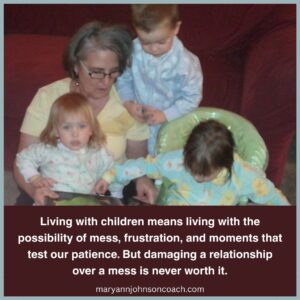
  • Living with children means living with the possibility of mess, frustration, and moments that test our patience. But damaging a relationship over a mess is never worth it.
  • Staying calm takes practice, practice, and more practice, and we won’t be perfect at it. The better we get at it, though, the better we feel about ourselves, and it tends to spill over into the rest of our lives too.

And here I am, all these years later, practicing all over again. : )

Drunken Snails and Other Miracles

When I moved from Montana to Utah in my late 50s, something stopped me in my tracks – the realization that I was responsible for my responses, no matter the circumstances or the people involved. This hit me hard. I couldn’t blame others for how I felt! I was mad and honestly didn’t want it to be true. But I am a learner, and the thought wouldn’t leave.

The Quest

I began a quest to learn more about receiving good into my life. I had grown up believing that everything was hard and a struggle. I was done with that story. One of my early mentors was Leslie Householder. I read her book The Jackrabbit Factor and its sequel, Portal to Genius, and attended several classes. What I learned changed everything. If I had faith, believed in myself, and kept a handle on my thoughts, miracles could and would happen.

I wanted all seven of my kids to understand what I was learning. Without meaning to, I had taught them through example that life was hard and a struggle. We live how we were taught. I wanted something better for my kids. I wanted them to have control over their thoughts and the results that come from holding to the belief that we are creators, not victims, and that we can have miracles.

Andrew was twenty-nine at the time. He had just lost a job he had given his heart and soul to and gotten very little back. He was feeling down about it. Every time we talked, and that wasn’t often, I asked him if he had read The Jackrabbit Factor. I knew it would help him see things in a more positive light. I have to admit I nagged just a bit!

One morning he called me and talked for about 40 minutes. This was out of the ordinary, as our calls usually lasted 10 minutes, with me asking questions and him answering with a yes or no. He wanted to share what he was learning and say thanks. Andrew is a quiet man and not demonstrative, but I could hear the happiness in his voice. He was excited and grateful. He even told me he was glad I had nagged!

Andrew had been practicing the principles Leslie taught, and they were working for him. He was still looking for a new job. Then his car broke down. For several months it just sat there. After reading the book, he set a goal to get it fixed and changed his thinking about it. Within a few days he got two calls, offers of help and less expensive parts than he had expected. The car got fixed. He also found work that suited him well.

What About Those Drunken Snails?

Here’s another fun example of the changes in Andrew’s way of thinking. Simple yet powerful.

He is an avid gardener. He had a very small yard, at the time, which he tended with loving care. One year he planted sunflowers which the snails promptly ate. He planted them again the next year. To ward off the snails, he put pans of beer in the garden. One night there was a huge storm. He was sitting in the living room worrying about his 1″ high sunflower seedlings. He had this thought, “Last year the snails got them, and this year it’s the storm.” Then he caught himself and remembered what he had learned from reading The Jackrabbit Factor. He changed his mind chatter to, “It isn’t morning yet, so I’m not going to sit here and worry about what hasn’t happened. They will be just fine.” When he went out to check on the seedlings in the morning, he told me that not only were they just fine, there seemed to be twice as many sprouts and the garden was filled with very happy, drunken snails!

This experience with Andrew happened in 2010. At the beginning of that year, I had made a list of things I wanted in my life. They weren’t physical things but quality-of-life changes. For them to happen would require miracles. Because of the principles I had learned, I wrote them down, read them regularly, and waited for opportunities. One of the items on my list was that Andrew and I would have more meaningful and regular conversations. The book and his experiences opened a doorway for us, and our communication increased.

We all are who we are when we begin. Our job is to grow and to help our children see, by example, a better way. We can teach them as we learn. Our mistakes are not permanent. We can impact even our grown children if it takes us that long to figure things out — and sometimes it does. A good parent never stops working on becoming a better person, and in doing so they impact their children for good. I mentored parents for over a decade and a half, and the one thing most of them needed to hear was this — it’s never too late.

You can learn, grow, and be the example your child needs. It’s never too late!

I Thought I Had Committed (I Hadn’t)

In January, my daughter Jodie gathered a group of friends to work on having a better outcome in 2026. We listened to an interesting YouTube video by Daniel Pink. The premise was that structure beats willpower. We each determined what we regretted from 2025 and how we could do better in 2026 to avoid repeating our mistakes.

My regret was not getting my writing in until the last minute. I regretted that because it fed this old story — there is no time in my life for me — and it led to feelings of resentment toward those I care for. I placed my lack of consistency on them and their needs.

We also worked on choosing a priority goal. Of course, mine was to write every day, as consistently as possible, even if only for a few minutes, or to continue even if interrupted several times. I wanted to take responsibility for my choices and stop blaming and complaining.

Here’s something I shared early on in one of our conversation threads: “I have a hard time doing my own things even when I try. I do my personal morning routine, but it’s interrupted, and I usually don’t get any writing done. For the last four days, I rarely sat down, and tonight I didn’t even get to eat my dinner until 8 pm. No TV, no internet, no reading, no loafing, just serving and doing what’s necessary. I oversee what I choose to do, but I’m obviously doing something less effectively than needed.”

Jodie, our discussion leader, asked me if I had articulated my most important goals for the year. My reply was, “Not well.” After careful thought, this is what I decided was my most important goal for 2026 — to write every day, so I wasn’t pushed up against a deadline, feeling resentful, and hanging onto that old, untrue story.

As we wound down the class, Jodie — my daughter and the discussion leader — decided we would be good accountability partners. Interestingly, Jodie had the same goal: to write consistently. We checked in with each other daily for two weeks. On some days our writing got 10 minutes, and on other days an hour.

At the end of the two weeks, I realized that it had become easier to write daily. I was able to write every day except Sunday, which I take off, and I was more prepared as my publishing deadline loomed. What had happened? Nothing in my life changed — not the schedule, the interruptions, the people, nothing. If anything, it had gotten more intense with Don’s fifth surgery on February 23rd. I had to think about this for some time because nothing had changed except that I was writing daily. My resentment had faded. I had stopped blaming my family and circumstances. What had changed?

For Me, it Wasn’t Structure Over Willpower but Commitment Over Intention

When I finally sorted it out, I had to laugh. It was something I know in my core and am very good at: making a commitment. I understand the importance of systems, or as Pink termed it, structure. I mentored mothers on workable and successful systems for over a decade.

I also understand the difference between intention and commitment. I had let life, complications, and caregiving overtake me. I hoped I could fit my writing in. I wanted to fit it in. I knew it mattered, not just to my readers, but to me. I seriously thought I was trying. But here is the crux: I had not continued in the commitment I had held before I became a full-time caregiver. I had consistently written, despite vacations, illness, schooling, etc., for years. But that earlier commitment had morphed into an intention, a desire, a hope. I felt serious. I cared deeply. But I was no longer committed to the task! It’s embarrassing to admit.

Such a Simple Difference — Commitment vs. Intention

From decades of experience, I know when I’ve committed and when I haven’t. It rings in my heart. For example, I’ve discovered after some research, prayer, and thoughtful pondering that some of my physical problems are caused by sugar. During a prayer, I told God I intended to stop eating sugar. You all know I cook almost everything from scratch and use only Monk Fruit and no wheat flour. I’ve done this for over five years to help Don with his health issues. However, three years ago, I began having a harder time staying on the sugar-free wagon. After my hip surgery last September, it became even harder. I was weary and ate food that others provided. I still did a ton of cooking, but the few months that others cooked for our family put me back on the sugar wagon. I’m sure God smiled when I told him I was giving it up. He knew I hadn’t committed. He knows me.

Over 30 years ago, I had to give up all pork and chocolate. They cause serious mood swings. I’ve researched the components of both, and they share some things that cause the swings. When I realized these foods were not good for me, and after a great deal of prayer, I made a commitment about pork. It took several more months and some experimentation when it came to chocolate. 🙂 However, for over 30 years, I have not budged on these two things, not once! This is where I need to go with sugar.

It’s where I need to go again with my writing, despite the major changes in my lifestyle. The class was in January. Jodie and I began holding each other accountable in February. In the next few months, I didn’t miss one day, not one. Why? Because it changed from an intention — a need, a want, a hope — to a commitment to myself.

Because of my way of being, when I commit, it’s usually a done deal. I rarely need outside accountability. It doesn’t work this way for everyone. We all have different personalities, and some of us are better able to commit than others. But I’ve seen even those who find it hard to make a commitment to themselves — and then hold true — do it, if it matters enough and if they understand themselves.

A helpful book to read about your way of being is Gretchen Rubin’s The Four Tendencies. She categorizes people into four groups: Upholders, Rebels, Obligers, and Questioners.

The book explains how understanding your tendency helps you make better decisions, form habits, and improve your life by working with your nature, not against it. It reveals why some people easily meet deadlines while others struggle with self-imposed goals.

Upholders meet both outer expectations (e.g., work deadlines) and inner expectations (e.g., New Year’s resolutions) easily. They value discipline and structure.

Questioners question all expectations and will only follow them if they make sense. They resist outer expectations unless they can justify them internally.

Obligers meet outer expectations readily but struggle with inner ones. They need outside accountability to follow through on their own goals.

Rebels resist all expectations, both outer and inner. They value freedom and individuality and need to feel they are making their own choices.

I’m an Upholder, and my shared experience this year with these other women showed me I hadn’t committed. Jodie, as an Obliger, needs external accountability. Since we are no longer holding each other accountable, she has struggled a bit and has had to find ways to manage her tendency. When we understand our way of responding, we navigate better. Don, my husband, is a Questioner and needs to understand why. Knowing this about him helps me help him.

It isn’t useful to beat yourself up when you find it hard to commit and stick with it. Instead, understand yourself so you can find ways to make it work. You don’t need to read the whole book — just take the easy quiz. Then accept yourself where you are and learn to work with it.

Back to the sugar. I realized that even though I can usually hold myself accountable, in this difficult season, I needed some outside accountability. I had an appointment with my naturopath last week, and we talked about sugar, and I committed. This week, she reached out to see how I was doing. I was glad I could say, “Making progress.”

The Results of My Writing Commitment

I manage that old story better — there is no room in my life for me. There is if I make it happen. The story still surfaces, and maybe always will, but I can rewrite it quickly. I no longer panic over repeated interruptions (well, not as often). I know that my consistent effort will pay off. I am experiencing it.

I’ve stopped blaming circumstances and caregiving for my lack of getting it done. If I miss a day, I know I chose to miss. Again, this takes daily practice, but I am managing better.

I feel less anxious and resentful. I’m still a work in progress, but I am so much calmer, kinder, more tender, and on top of my deadlines than I was.

Am I perfect? I’ve missed some days, but if I make it 90% of the time, that’s a HUGE win — and I’ve been doing that. It can still be only 10 minutes. I’m still repeatedly interrupted when I sit at the computer, but realizing why I was struggling, taking responsibility, and giving up blame has been life-changing. Now, the blame is where it belongs: on my shoulders. That can be irritating, but taking responsibility feels better than being a victim.

What is Your Commitment?

My friend, Mary Black, and I visited a month ago. I shared my experience with her. I told her it was embarrassing that I was struggling with something I understand and have taught. Here was her response: “Oh, I am feeling that right in my soul. That’s exactly what I needed to hear today, Mary Ann, so thank you, thank you.” This is something we all deal with. As you look at the places in your life that aren’t working, could a lack of commitment be the issue?

If you’re struggling, think carefully. Have you committed to whatever it is — being calmer, touching your kids more, keeping a family system going, accomplishing a goal, learning a language, creating firmer family relationships, being a better housekeeper, getting rid of stuff, overcoming a weakness, and so on?

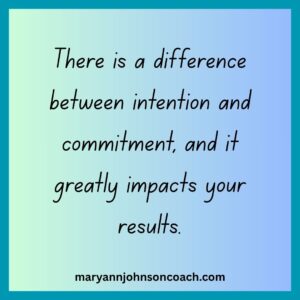
There is a difference between intention and commitment.

A Spring Story – A Principle Taught

It’s spring — that season of newness, freshness, and quiet beginnings. It seemed the perfect time to share a story from Jaroldeen Asplund Edwards’ book The Daffodil Principle, because it beautifully illustrates something I’ve come to believe deeply: that lasting change happens 1% at a time. Not in grand gestures or overnight transformations, but in small, consistent efforts that grow into something magnificent. The story below is a beautiful illustration of this life-changing principle

Daffodil Garden

Several times, my daughter had telephoned to say, “Mother, you must come and see the daffodils before they are over.” “I will come next Tuesday,” I promised…

We parked in a small parking lot adjoining a little stone church. On the far side of the church, I saw a pine-needle-covered path, with towering evergreens and manzanita bushes and an inconspicuous, lettered sign “Daffodil Garden.”

We each took a child’s hand, and I followed Carolyn down the path…Then we turned a corner…, and I looked up and gasped. Before me lay the most glorious sight, unexpectedly and completely splendid. It looked as though someone had taken a great vat of gold and poured it down over the mountain peak and slopes, where it had run into every crevice and over every rise. The flowers were planted in majestic, swirling patterns, great ribbons, and swaths of deep orange, white, lemon yellow, salmon pink, saffron, and butter yellow.

“But who has done this?” I asked Carolyn. I was overflowing with gratitude that she brought me…This was a once-in-a-lifetime experience.

“It’s just one woman,” Carolyn answered. “She lives on the property. That’s her home.” Carolyn pointed to a well-kept A-frame house that looked small and modest in the midst of all that glory.

We walked up to the house, my mind buzzing with questions. On the patio, we saw a poster. “Answers to the Questions I Know You Are Asking” was the headline. The first answer was a simple one. “50,000 bulbs,” it read. The second answer was, “One at a time, by one woman, two hands, two feet, and very little brain.” The third answer was, “Began in 1958.”

There it was, the Daffodil Principle. For me, that moment was a life-changing experience. I thought of this woman whom I had never met, who, more than thirty-five years before, had begun – one bulb at a time – to bring her vision of beauty and joy to an obscure mountain top. One bulb at a time. There was no other way to do it. No shortcuts – simply loving the slow process of planting. Loving the work as it unfolded. Loving an achievement that grew so slowly and that bloomed for only three weeks of each year.

Still, just planting one bulb at a time, year after year, had changed the world. She had created something of ineffable magnificence, beauty, and inspiration. The principle her daffodil garden taught is one of the greatest principles of celebration: learning to move toward our goals and desires one step at a time – often just one baby-step at a time – learning to love the doing, learning to use the accumulation of time.

When we multiply tiny pieces of time with small increments of daily effort, we too will find we can accomplish magnificent things. We can change the world.

The thought of it filled my mind. I was suddenly overwhelmed with the implications of what I had seen. “It makes me sad in a way,” I admitted to Carolyn. “What might I have accomplished if I had thought of a wonderful goal thirty-five years ago and had worked away at it ‘one bulb at a time’ through all those years? Just think what I might have been able to achieve!”

My wise daughter put the car into gear and summed up the message of the day in her direct way. “Start tomorrow,” she said with the same knowing smile she had worn for most of the morning. Oh, profound wisdom!

What I Have Learned

In my 76 years, I’ve never seen anything truly great happen in a single burst. Every worthy goal, every beautiful thing built — a family raised, a skill developed, a grief endured — was accomplished through small steps, taken one at a time, for as long as it took. That is the 1% Principle, and it has become one of the truest guides of my life.

Here’s what it means in practice: rather than trying to fix or change everything at once, you focus on the best 1% the one thing most worth improving right now. What I’ve found is that real progress in that one area quietly lifts everything else around it. You don’t have to splinter your attention across every problem. Consistent, focused effort on the right 1% creates momentum that spreads.

The woman in that daffodil garden didn’t set out to create a masterpiece in a season. She just planted one bulb. Then another. For 35 years. And the mountain was transformed.

You and I can do the same. We don’t have to have started 35 years ago.
We just need to begin today.

Transparency as We Begin 2026

I post once a day on my three Facebook sites and Instagram. For the most part, the posts are happy, upbeat, and about family. I do this for my readers, and I also do it as a way of documenting my family. Someday, these posts will be a series of books called 365 Days, 365 Ways to Be a Family.

Here is a post I made in September –

Two Wednesdays ago, August 20th, Don had a right hip replacement. He is recovering well, and it is a relief to have the pain gone. He has suffered for over a year while insurance, etc., was being worked out. This last Wednesday, September 3rd, I had a right hip replacement. Yikes, are we nuts or what? The fun part is that we are exercising together and doing PT together. Makes it a bit more enjoyable. I am only two days out, but I am doing VERY well! Thank goodness.

This elicited a response from an old friend: Hope you both recover quickly! I love how you make the best out of any situation. Kristine A.

Two weeks after this response from Kristine, my life went into the dumpster. I realized that most of what was happening would never be known by my family, followers, readers, and friends. Why? Because I wouldn’t talk about it or post about it. Why?

Almost thirty years ago, I began my journey to accept what God had told me when I still lived in Montana: You’re 100% responsible for your response. You cannot blame circumstances or others for how your life feels. I’ve written about this experience and the fact that it took over ten years to stop being mad about this information and to accept it; five years while still in Montana with a struggling family, and five in Utah, as I worked to understand this truth.

A few years after arriving in Utah, I took a class from Kirk Duncan at Three Key Elements. In that class, we talked about negative energy and how harmful it can be to spill yours onto someone else. They shared healthy ways to deal with negative emotions and experiences, without dumping on others. Then, I took several classes where I began learning that how I perceived a thing, my story, was within my power to control. It was a lot to take in, but I was eager to learn the truth of what I had been told by God and stop fighting against it.

Two weeks after my surgery, when I began struggling, I thought about Kristine’s comment. I was reminded how important it is that those I care about know I’m not perfect, my life is not perfect, I struggle, and I still must work and practice to live true principles.

I’ve thought a lot about this over the last few months, since my surgery, and I decided to share some of what I experienced because it may be valuable to you when things go wrong in your day or life.

It’s imperative to understand that no one’s life is perfect or pain-free, and no one responds well all the time. If we believe this, then we are less likely to compare ourselves to others because we know we do not have the whole story. This is true even of those we are close to.

After my hip surgery, I was told I would recover faster than Don because of my pre-surgery activity. I needed to bottle salsa because we were out, and my surgery was on the 3rd of September. I asked the PA if I could do this before the canning season passed. He said, “You can do anything you have energy for. Your new hip was made to stand on.” I took him at his word. I was going up and down our two steps the day I got home from surgery, doing my regular caregiving things, dozens of times. A couple of days later, I was making salsa. It turned out great.

At the end of week two, I began having deep feelings of discouragement, depression, and anger. I was diligently trying to do what my reader said I was good at, making the best of any situation. I wasn’t succeeding, and I began to struggle with my story. Because Don was pain-free and I wasn’t, I must have hurt my new hip. I was a nitwit to keep up my caregiving routine, cooking, doing laundry, etc., and not spending more time sitting and resting. My husband was incontinent after his surgery, and I had to wash 4-6 pairs of outer pants every day. My mom still had dementia and needed help with everything. I didn’t see any way out. Because I was up and about and looked great, no one realized what was happening in my head.

I couldn’t lie down without pain, so I had to sleep in a borrowed recliner for two weeks. Don was in the other one. I need darkness, and he needs light. I wake at the slightest sound, and he can sleep through anything. I wasn’t getting good sleep at night. I woke up often. I would look at the clock each time and say to myself, “Agggg, I only slept an hour and a half. What’s wrong with me?!” Every day was filled with fatigue, but I am who I am. I would get up and do what needed to be done. It’s my nature, but it added to the mental and emotional stress I was feeling. A full month passed.

Despite not understanding what was happening and feeling so discouraged, I pondered and prayed a lot, searching for information, resources, and solutions. I kept reminding myself that I have control over my story and how my life feels. I knew I needed more information than I had, that I needed help. Experience had taught me these things, and even though I wasn’t managing well, I remembered. I knew I needed to take a step.

I finally did a wise thing and sought support. I talked to my daughter. She had already begun seeing that there was a problem. She has a 19-year-old special needs daughter and three other teens. I didn’t want her to pick up any of my load, but I knew I needed help. She began doing small things whenever she came into our part of the house. She emptied the potty in Mom’s room, put more pants and Depends in the bathroom for Don, filled water glasses, did a load of dishes, etc. She asked me if we would share her evening meal, so I didn’t need to cook three times a day. She’s been sharing dinner with us for three months now, and some days I know it was a lifesaver. Beginning today, January 1, I’m taking it back. I’m ready. : )

Remember those prayers I said and the pondering I did? I was seeking information and resources. A week after taking that small step and talking with Jodie, a resource came. I have a scheduled call with my friend Joy every month. I got brave and told her the facts about where I was mentally and emotionally. She reminded me of a tool I knew about but hadn’t thought to use, tapping for health. I took her advice and put the tapping instructions on the wall across from the toilet. I began tapping every morning while saying my truth statements/affirmations. From the first day, I felt different. I could feel the anxiety, mental fog, and depression lessening.

Joy also mentioned that depression is part of healing and wasn’t happening because I was weak. What!! Could this be true? Here was new information. A light bulb went on, and I felt that what she was saying was true. In that moment, the story that I was a nitwit or had hurt myself caved in.

That same week, I got brave and mentioned how I was feeling with Laurie, the hospice nurse who comes and checks on my mom. She said, “Mary, depression is part of healing. It’s a reminder to rest and breathe. You’re OK, and it will pass.” There was my confirmation of the new information I had gotten from Joy. Laurie also told me that when we’re healing, we wake up at night because it requires energy to heal, and most of our healing occurs at night. So, waking up was also OK. Whew. Now, when I woke up, I would say to myself, “Wow, you’re doing some great healing!” The old story disappeared for good, and a new story took its place!!

Within a few days, I was feeling more myself. Within another month and a half, the fatigue was almost gone, and I could manage much better. I’m now four months out from hip surgery. Don has no hip pain, but I still do, occasionally. I know I haven’t hurt myself or overdone it; it’s just my healing process. I’m staying on top of my story. To solidify my story, when Don’s physical therapist came this last Wednesday, I asked him about it. He laughed and said something like, “You’re so busy. Sometimes your hip reminds you it’s still healing, but you’re OK.”

Here is the point

of this very transparent, vulnerable, and lengthy article – we are all doing our best, but it isn’t always enough. There are times when we need help, more information, and resources.

When I was in trouble, I utilized what I had learned from experience. When you’re struggling, they may help you.

1. Don’t dump your negative stuff on people. If you’re feeling negative, sit in the car and yell. Go outside and hug a tree and dump out all your frustration and anger, all your hurt.
2. Then begin seeking solutions. Take charge of yourself. Be willing to take a small step.
3. Ponder, pray, read, talk to a friend, whatever works for you, and seek information and resources. They are there, but you must take a step to find them. You must move. My first step was talking to Jodie. I wish I had done it in week two and not a full month out. I wouldn’t have sunk so far, suffered so much, and would have made quicker healing progress.
4. Remind yourself you’re in control of your story. If it stinks, take charge and do what you need to, to rewrite it. Stay out of blame, even if you want to blame the young P.A. for his youthful words. : ) You are 100% responsible for your response to whatever is happening.
5. Never judge yourself by what is happening on social media, in your neighborhood, at church, or among your friends. Comparing is always a slippery road to take.

The Truth

I put my best out there because I can help others when I do, but I am not always happy, gentle, cheerful, or in control. I have tough days, and I’m always working on a story of some kind. Just know we are pretty much all alike, succeeding and failing at the same time, and it’s OK. Here’s something I say to myself every morning. It’s one of my truth statements/affirmations: Every day, in every way, I am better and better.

Please know I will always tend toward the positive because I have spent over 30 years learning how to take responsibility for myself and my life, regardless of circumstances or what others do or say. I am practiced at it. Also know that I struggle still. Life has its ups and downs. There’s always something new to experience and figure out. Sometimes I’m successful in an effort, and sometimes I fail. That is life.

I want you to be brave and do what I have done. Practice taking 100% responsibility for you. Forgive others. Forgive yourself. Talk kindly to and about yourself, even when you mess up. Give others and yourself grace. Be patient when you don’t know what to do, even if it takes years to figure out. Remember, it took me ten years to stop raging and another ten to accept that I had 100% responsibility for my response. If you keep pondering, praying, learning, growing, and changing, you will find the resources and information you need.

Let this year be a year of personal growth. Welcome 2026!

When Things Go Wrong

The article I had prepared to post on November 30, 2025, had been published in 2017. My Excel sheet wasn’t as in order as it needed to be. Instead of getting another article ready at the last minute, I wrote a note to my readers and sent it out via the Sunday newsletter. It made an impact, and I got emails. I realized that I had written an article with an important message without even knowing it. So, I’m posting it on the website and recording it. If it helped last Sunday, then it may be of help in the future. So here you go:


When Things Go Wrong

I mentioned last spring that I was in the process of speeding up the transfer of articles from my old website, Home School Coach, to this newer, more universal site. Not all the articles will be rewritten, but most will be. I’ve been working on this project since the new site went up in August of 2017, but I had over 600 articles on the old site. There were always new things to write about, so only a few rewrites made it to the new site. You can see the enormity of the project. : )

I have an Excel sheet that has a link for every article posted from April 2010 until March 2017. When an article has been rewritten, I put the date it was published on the new site, Relationship Transformations for Busy Parents.

A month and a half ago, I sat down to determine what articles I might want to rewrite in November and December. I put them in my blog file with the date I planned to publish them. I was happy about the one I had planned for November 30. It had been published on December 8, 2011, and was titled Easy Christmas Crafts and Gifts for Kids to Make.

Last week, I spent time doing a fabulous rewrite. I knew it would come in handy for busy moms who wanted to help their kids give gifts from the heart. In fact, that was the new title, Giving Gifts From the Heart.

So, What Went Wrong

Last Friday, I did the final edit and put it on the website. I finished the formatting and was ready to do the newsletter. I wanted to see if there were any articles related to the topic that I could link to the article for the 30th. I opened a second window in my current website and searched. WHAT!!! The very article I had spent hours rewriting was already on the new site. It was titled Help Kids Give Christmas From the Heart and had been published on 12/8/19.

I sat there in shock! How did that happen? I knew I had probably been interrupted and never got the date that it was rewritten and published, added to the Excel sheet. Here’s the problem. I work very hard to NOT have any writing to do on Saturday. I never really have a free day, but I try to do my cleaning on Thursday and have my writing finished by Friday, so I don’t have any deadlines on Saturday. Such a bummer.

I am very consistent, and I always do what I say. These are part of my way of being. So what was I going to do? I perused my list of upcoming articles, and there was another great Christmas one I could rewrite on Saturday and keep my commitment. That was my plan.

However, I have been tutored by God this year on several additional ways of being. One is looking at a situation, deciding what matters most, and determining how best to problem-solve. As I worked through my morning routine Saturday, I kept feeling like there was something just as valuable as rewriting an article. Hmmmm. What could that be? After all, I have committed to publishing an article every Sunday at 9 am, and consistency matters.

Here is what ultimately came to my mind. “People want to hear from you, Mary Ann. Sometimes you say something that impacts their lives in a big way. At other times, they smile and are just glad to hear from you. Let this Sunday be one of those days.”

So there it is. You will read the fun Christmas article I had planned for next week, next week. This week, you are hearing from me that I am OK, life is manageable, and that when things go wrong, there is always a solution that is a win-win.

I hope your Thanksgiving was happy and fulfilling. Mine was. I hope that as we enter the coming holiday season, we remember that everything won’t go as planned. Things will go awry, but we don’t need to fall apart. There are workable solutions if we remain calm and think it through. : )

I’ll be back next week,

and the article will be fun!

The Value of Expressing Gratitude

Several years ago, I wrote an article about the importance of gratitude. I’m posting it again because this is the season when we think about expressing gratitude. However, I hope it helps you take some daily actions that move you to think about what you are grateful for every day.

The Turbo Pickle

When I had seven children, I had a green car the kids dubbed “The Turbo Pickle”. It had several dents and was very old. When we drove around a corner, someone had to hold the door, or it would fly open. My teenagers made me let them out a block from school. I had gone several years without a car, while Don was an over-the-road salesman. This car seemed like a gift, and I felt real joy in owning it. It was a blessing to us that my children didn’t always recognise. My life felt very abundant because we had it. I like to think that I was living the words of Frank A. Clark. “If a fellow isn’t thankful for what he’s got, he isn’t likely to be thankful for what he’s going to get.”

I was able to feel this abundance because early in the year, I had gone on a quest to find prosperity. I had read about it in the scriptures, and I knew that it was a gift of the heart, not a manifestation that came from outward circumstances. I had prayed that, despite our challenging financial circumstances, I would understand and experience prosperity. A miracle occurred. Although our income didn’t change at all, I felt very prosperous for several years. I never worried about having bread or milk. I knew it would come, and it always did. This was a magnificent experience that I cherish to this day. My experiment with the idea of prosperity made some very lean years feel abundant and comfortable.

Some things are an inside job – prosperity, happiness, peace, and gratitude, to name a few. They happen in the heart and are not ruled by what happens in life; these gifts of the heart make life wonderful and worth living. We must want them, ask for them, and do what is required to change ourselves, to receive them. If we’re sincere in our desire, this magnificent change of heart will come, and we will see with new eyes.

Lately, I’ve been seeking a greater sense of gratitude. I’ve asked for more of this gift of the heart. I’ve been reading about gratitude and practicing expressing it. I write in my gratitude journal, I express gratitude to others, and in prayer, say “Thank You” when I receive. I want gratitude to be a more natural part of how I am.

Gratitude dispels fear. It can lessen sorrow, worry, depression, grief, anger, and loss. This quote rings true to me: “There is no such thing as gratitude unexpressed. If it’s unexpressed, it’s plain, old-fashioned ingratitude.” Robert Brault

This Sunday I am grateful for:

1. Those who read what I write and let me know that it matters to them.
2. Seven remarkable children who grew into amazing adults, despite the inadequacies of their parents, and gifted us sixteen grandchildren.
3. An unexpected mission in life (caregiving for my mother, husband, and helping with my granddaughter) and for the challenges that it brings. Because of them, I am becoming more.
4. My sweetheart, who, despite his health issues, still hugs me and tells me I am beautiful
5. My Savior Jesus Christ and my Heavenly Father. They make ALL the difference in my life.

As you prepare for Thanksgiving Week, think about all the ways you have been blessed, despite any challenges you face. When you do this, you will find that you have experienced miracles, grace, friendship, and found ways to serve.

Rejoice over these gifts.

Five Principles of Power – Principles 3 and 4

Recently, I wrote about principles that I consider powerful for a healthier and happier family life. Last week, we delved into principles one and two. Today, I will share information and examples on principles three and four.

As I said last week, as you internalize these principles, you will see greater success in all parts of your life. This is a promise I can make based on my own experience.

Principle 3

Make it special. When we want someone to look forward to something, we make it special. We do this at weddings, birthdays, and on holidays. But it’s just as important in our daily family activities. Let me share an example from my own life.

I recall a trip we made from Idaho to Utah. We were moving, and Mom was driving us to meet our dad at the new home. She had all nine of her kids in the car. My two sisters and I were in the very back of our station wagon. (No seatbelts in those days.). I was fourteen, Cindy was 13, and Shirley was twelve. Old enough to behave, right? At one point, we were so bored that we began fighting. My mom yelled repeatedly from the driver’s seat for us to stop because we were riling up the other kids. After a lengthy time, Mom pulled over, raced to the back of the car, popped the window open, and reached for us. We, however, were scrunched up at the back of the middle seat, and she couldn’t reach us. She told us in no uncertain terms to stop fighting and remain calm, that we were almost there. Then she got back in the driver’s seat. I will never forget what happened next. I looked at my sisters, they looked at me, we smiled mischievously, and went at it again. I know, we were being naughty on purpose, but we were bored!

I learned something from that experience that helped me when I traveled with our seven kids: make it special! I learned even more as I watched my husband. Don knew how to do this well. On any trip he planned, he would insert one or two stops at city parks. Everyone got out for fifteen minutes, and then we hit the road. At first, this drove me nuts. I mean, we needed to get where we were going. Over time, I saw how helpful this was for our children. They loved our trips and looked forward to the short stops. Don knew how to make it special.

I had a different way of accomplishing this. I would make goodie bags and hand them out at the beginning of the trip. They contained homemade treats and cheap toys or books from the dollar store. In our day, that was the town drug store. : ) Sometimes, rather than a goodie bag, I would have a bin of books, games, cards, coloring materials, etc. that I kept just for road trips. They weren’t brought out at any other time. We also had a few car games, and we often sang as a family. Yes, my kids liked that. Here is the key – what isn’t always available is special when it is available.

This idea of making it special applies to many things, such as going to church, doing chores, or bedtime. Really? Yes. I have a special bag that goes to church with me. When the grands are reverent, they get to pick a treat out of the bag. I’ve been using this bag for over ten years, and although all the grands are now teens and don’t need the bag to be reverent, they enjoy getting it anyway. It’s become a once-a-week tradition. : ) Maybe you have special books that are only used at church. Whatever isn’t always available feels special.

Even chores can be made special. After Saturday chores, have a simple treat. As each child or teen finishes their assigned items, they can have a treat, no waiting on others. You could have a ten-minute dance party just before everyone goes off to do chores or even gather when everyone is done. Laughter, smiles, and treats can make even the most arduous or mundane thing special.

And what about bedtime? I’ve learned that even bedtime can be more stress-free when it’s special. My grands in Washington were notorious for not going to bed, and when in bed, calling out over and over again. When I visited, I instituted something special. I would sit by the bed and ask two questions: What was the hardest thing that happened today? What was the best thing that happened today? They would each get to answer the question, and we talked about it. They loved this. When we were done, each was to lie still, close their eyes, and breathe. I would sit there for another ten minutes while they complied. By then, they were usually asleep.

Another simple way to make bedtime special is by giving each child just three minutes to hug, cuddle, or talk. Then say goodnight and move to the next bed or room. I’ve had parents tell me that doing this one simple thing has made a difference for their kids because it makes bedtime special.

Principle 4

Keep it simple. As in the above examples, while working on making things special, we need to remember to keep it simple. When we make things hard, expensive, time-consuming, or too costly, the activity usually dies a slow death. We had a weekly family night. There was prayer, a story, and a simple activity. We ended with a treat of some kind. This was a family activity suggested by our church. As we went along, many members of our congregation began making this simple family home evening a big deal. Bigger treats. More challenging activities. More resources were required. I found myself letting it slide because I didn’t have the time or energy for all the preparation. I felt that if I wasn’t doing all the ‘stuff’ other families were doing, my kids would feel ours was lame. What was lame was that we stopped doing a fun thing that brought our family together. Eventually, we returned to simpler content, and it returned to a weekly event.

Here is a cool idea a friend had for her children’s bookshelves. She would periodically remove books and add in books that had been removed months earlier. This kept her children’s interest in the books because they felt new. She wasn’t constantly having to buy books or go to the library. This also got her kids to engage with books that they ordinarily wouldn’t have read. It helped make their family reading time more exciting.

Sometimes you’ll have an activity that you think is special, but your kids don’t, and it isn’t as successful as you hoped. That is OK. Get your ego out of the way. Try another activity next week or new items in the car for the next long drive. Be willing to experiment.

I did some work for a woman who taught me a profound lesson. Her closet was so neat, and I asked her how she managed it. She replied that if she bought something, then she had to give something away. This simple ‘rule’ that she had for herself kept her whole home in far better order. She had learned to keep it simple.

We can expand this idea to many areas of our lives. Take a vacation, for example. Don’t overload it. A few activities, well thought out and engaged in, beat a schedule that wears everyone out and leads to misbehaving, irritation, and contention.

When we add a new commitment to our calendar, we should remove something else. One of the great tragedies for families is that we are so “booked” that we do not have time for one another; we cannot enjoy one another. Running from one thing to the next until we are totally worn out is a good way to miss our family life, which is really the life we want. When we keep things simple and consistent, our results skyrocket.

We want to have a real connection in our family. We want peace and calm as often as we can manage it. We want activities that bond us together.

This all happens best as we make things special in simple and sustainable ways.