
 One evening, my husband Don was watching Sci-Fi on TV. I was cooking and could hear it. A man said to a woman, “To heal your wounds, you must see the past clearly.”
This woman had been mad at her mother her whole life. Her mother was killed in the jungle while trying to catch a spider known for its miraculous healing properties. Before dying, the mother delivered her child, who lived. The woman believed her mother went because of the wealth the spider would bring. She wondered why her mother had cared so little about her unborn child.
The man sent the woman into the past, to the jungle. She saw her mother’s excitement when they caught the spider. She saw her mother being attacked, then deliver her baby, and die. Those helping the mother used the spider venom on the baby’s tiny body. The woman had not known that her life was in danger, and her mother had gone into the jungle to save her.
When the woman returned to the present, she said to the man, “I didn’t know she was trying to save me. I didn’t have all the information and assumed she didn’t love me enough to keep herself out of harm’s way.” This woman physically returned to the past to get facts and clarity about something she didn’t understand, and it was life-changing.
I have heard all my life that you can’t change the past. You can’t go back. You have to let it go and move on. I no longer accept this counsel. I have experienced that we can change the past, at least in our minds, how it affects our present and future, and you don’t need to go there physically to do it.
The second perception experience was with my 50+ year old son, Seth. He has lived on Jodie’s property, where I live in our four-generation home, for over a year. It’s been nice to have his presence and help. We have all benefited, including Seth. His reason for coming here, from Montana, which he loves, was to take a series of classes to help him do some healing work. You see, no one’s past is trauma-free. It is the bag thing. : )
After Seth finished his classes, he began working as staff/support for others on the same path. That fulfilling way to spend time is what has anchored him here. A few weeks ago, after working at a session, he had the opportunity to share an experience, to illustrate to those in the session that yes, you can change the past. The listeners were moved. Since then, he has been asked to share with others.
I asked Seth to write his experience so I could share it with you.
The Fundamentals of Changing Your Past by Seth Johnson
I am sure many of us, at different points in our lives, have said, “If I could just go back in the past and change that one thing, my life would be so different”. That sentiment is something I have said to myself hundreds of times.
Is it possible to change your past?
Yes, it is. You may be asking yourself, “How is that possible?” Well, it’s possible through rewriting the story and changing your perception of the memory you acquired through that experience. What does that mean?
What are the fundamentals of our past?
The fundamental aspect of our past is not the actual experience but the perception we create in our memory of that experience, which can either be good or bad in relation to how it affects our life. So, by rewriting our perception of the past, we then change our past.
A Real-life Example
“I spent 20 years hating my ex-wife. I told myself that she was a terrible person, that she destroyed my life, and the self-confidence I had, that I would never forgive her for stealing my dog, etc. etc. I have spent the last year and a half going through some personal development training and although what I am speaking of here was not necessarily one of the topics in class, I found this knowledge along the way.
The answer to changing my past was through rewriting the story, thus changing my perception of how I feel about her. I do not hate her anymore, and I never actually did. I truly love her and wish her the best in life. She did not destroy my self-confidence. I chose to be in a situation that created a beautiful learning experience. Not everything was bad; we shared beautiful times, and we loved each other in the way we knew how to love, which was distorted through early experiences in life regarding love. Neither of us knew how to show love healthily.
I chose to carry that hate and hurt for 20 years. It was never about the actual things she did along the way. I wasn’t perfect either and played a part in it all. It was the perceptions I placed into my memories regarding the so-called “bad things” she had done. The moment I re-wrote the story, it changed the perception of the story of my past, thus changing my past.”
Our Perception Does Matter
When something good or bad happens, we perceive others’ intentions and motives. Then we create our story around what we have chosen to believe. That isn’t always bad. But occasionally it’s helpful to rewrite a story and take a second look at an experience, if it is causing us pain, sorrow, grief, or another unhealthy response that negatively affects our life.
This is simple, but like many simple things, it isn’t easy. We can’t magically send ourselves back to an experience and watch it as if it were a movie where we are privy to what we didn’t know or understand. However, we can take our minds back. We can take a second look. We can give others the benefit of the doubt and think the best. We can choose to forgive even if the offender had bad motives or committed a terrible wrong.
And why would we do this instead of just holding the other person accountable? So we can free ourselves, to heal, to move forward, and have a better life
I know from my and Seth’s experience that when we understand the power our perception has, no matter our age, we can change the past, at least how it affects us going forward.

 I’ve written many articles on the importance of making sure the story we tell ourselves is helpful to our sense of well-being, healthy relationships, and happiness. How we perceive something matters.
 I have learned from lived experience that simple systems are usually the solution to difficult problems in time and life management. This was not an easy lesson to learn, and I occasionally still ignore this truth, but when I do,
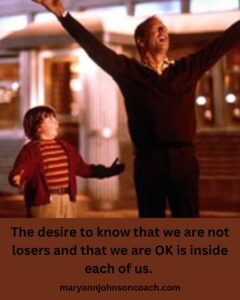 From the movie The Kid
 When I began teaching, mentoring, and writing family-centered articles, I was working with the homeschool community. However, in 2016, as I started writing my book Becoming a Present Parent, I realized my message about connecting with children was beneficial to a wider audience.
 their brain.
 brain.
 ears,
ears, very different things! When people look up towards the sky, they are looking to their Higher Power. They are looking for new answers, inspiration, and connection with whatever they believe in that is bigger than them.
 They are soul-searching. This answer may take longer to find. It also takes more trust to share. If you see your child look down, it’s essential to stop what you’re doing and adjust your focus to your child. When they find their answer, they will check in with you. If you’re not paying attention, they are not likely to share their thoughts. They will swallow them down and decide that how they feel is not important enough for your time.
 My husband was watching the show The Irrational. It’s about a behavioral science professor who solves tough police cases. I was in the kitchen and could hear it. The main character had an appendix surgery. He tried to rise from his bed a few times because there was a case he wanted to get going on. His sister had to nag at him to remain in bed and heal. At one point the professor spoke with a priest, while still in the hospital. The priest said, “St. Stillness has visited you.” Then he smiled and the professor replied, “Oh, stillness. I’m not very good at it.”
 Let me tell you a moving story about my grandpa. My grandmother had passed away, and my grandfather who was in his late eighties, was living with his daughter and fading. I visited him and he was happy to see me. We talked for a while and then I visited with my Aunt Carol Lynn.
 My friend Livia read a book about Neal A. Maxwell. In the book, they used the phrase ‘peaceful intensity’ to describe how he managed his busy life. It’s a way of being that can be cultivated. It involves how we perceive
 This week’s article was written by an online friend of mine, Laura Pearson, who shared it with me via email. When I read her article, I realized that my daughter Jodie has incorporated many of these tips into her home and family life. They’ve been useful to my grands. Although they are all teens now, they have been using tools like these since they were in grade school.