 I want to tell you about an experiment I did years ago. I had been talking to families about the Spark Station and quickly realized that something wasn’t clicking for a lot of them. They liked the idea, but it wasn’t working the way it should. I could see clearly that these parents were missing the vision of the real power this tool could have in their homes. So, I decided to test what I knew worked with real families — five of them, over two months.
The families were wonderfully different from each other. One had three children ranging from a newborn to three and a half, with the oldest having severe cerebral palsy. Another had three children ages six, ten, and twelve. One family had five children from ten months to eight years. Another had four children, ages five to sixteen. The last had five children, ranging from a newborn to ten. I talked face-to-face with parents and children, and what I learned from those two months shaped everything I now teach about the Spark Station. What I found was this: the tool itself wasn’t the problem. The principles behind it were.
It’s About Five Rules, Not the Stuff
I want to share a letter I received that illustrates this perfectly. “I had to send off a quick thank you for your help. The Spark Station is transforming our family learning experience and fun! Last Saturday, I found dollar insect items at Target. We are having a blast. I almost passed up the big plastic insects as ‘toys’ but realized, no, they are inspiration for my little boys and models for insect body parts. What was I thinking?”
Isn’t that a great letter? I have received many such letters, but here is what I want you to notice. This mom thought it was about the plastic insects. It wasn’t. It’s about a mom who was focused on inspiring her boys. It’s about a mom who meets with her children consistently and stays present. The insects are wonderful, but they are not the magic.
The magic’s in the Five Principles of Power. I’ve said this before, and I will keep saying it, because I want you to be convinced that these rules work, not just in learning but in family connection and fun.
Here they are:
1. Structure time and be consistent
2. Be present
3. Make it special
4. Keep it simple
5. Plan ahead
Understanding them deeply is what makes everything else work. I introduced them last week, but now I want to illustrate how the rules work in real families. Let’s start with the first three.
Structure and Consistency: Honor the Time
Once you have set a time for your family to use the Spark Station, honor it. Consider it sacred. I received an email from a mom who had just gotten her Spark Station ready and structured some family time, when every child came down with a cold. She shelved the whole thing for a week.
I understand. I raised seven children, and I know what it feels like when everyone is poorly. But here is what I told her: Hold to the time, even when life gets in the way. Modify it — gather your children, read for a few minutes, give everyone a glass of juice or hot chocolate, and call it good. The point is consistency. It allows your family to depend on time together, to know they can count on family time.
Illness isn’t the only thing that will challenge you. There will be days when you’ve made more commitments than you can manage. We all do it occasionally. When that happens, gather your children together, begin as you always do, read briefly, or visit about something important to your family, and call it good. Something is always better than nothing; your family will appreciate the consistency.
Be Present: The Real Gift
Being present is a gift — to whoever we give it to. It means listening without texting, checking email, or watching TV out of the corner of your eye. It means being all eyes and ears for what’s happening right now. Families feel more secure and happy when parents are truly present, and that feeling is the heartbeat of the Spark Station.
A reader once wrote to ask whether she was supposed to put activities in the Spark Station and observe, rather than jumping in with her own ideas. She worried that it seemed counterproductive to have a learning agenda when the whole point was connection.
Here is what I told her: when you’re working with a child under six, they usually want you to play with them and be with them. For them, it’s all about being with you and having that warm family feeling. That is the connection. Your learning agenda is simply what you choose to put in the Spark Station. Once it’s open, follow their lead.
Regardless of what is in your Spark Station, let each family member choose what they want to engage with. If it is on Sunday, everyone will be there. If it’s to unwind after school, just the kids and you, etc. If they ask questions, answer them. If they want you to play, play. If they seem content exploring on their own, let them.
Make It Special: The Siren’s Song
One dad described the Spark Station this way: “It’s like Christmas. The excitement stays because it isn’t available all the time. It’s amazing!”
He’s exactly right. The Spark Station only sings to children and family when it’s treated as something special — available at certain times, consistently, so it can be counted on and looked forward to. That anticipation is powerful.
I received a letter from a mom named Pam whose ten-year-old had just discovered cross-stitching materials in their Spark Station. She had only gotten three stitches in before lunch, and Pam knew her daughter would be frustrated not to continue. She asked whether there was ever an exception to keeping a project in the Spark Station rather than letting a child use it freely.
Here is what I told her: keep it in your Spark Station, and here is why doing so works in your favor. Your daughter isn’t bringing you a wad of tangled thread when you are up to your elbows in bread dough or separating squabbling siblings. The project’s also safe from the curious two-year-old, the interested six-year-old, and the teasing ten-year-old. A twelve-year-old girl told me what she loved most about the Spark Station. She said, “When you’re working on a cool project, and you have to stop, you’re excited about getting back to it ” Kids get it.
This principle works with things that are new to your family — cross-stitch, calligraphy, woodworking — and it works equally well with things they have had forever. I’ve seen parents take a book off their bookshelf, one their children have walked past for years, put it in the Spark Station, and suddenly everyone wants to read it. One young girl asked her mom to put a geography game in the Spark Station. It had been unused for over a year. Once it went in, she and her siblings played it many times.
As for how long an item stays in — it doesn’t matter. A day, a week, a month. When it comes out, its Spark Station life is over, and something new takes its place.

 The Day of Surgery
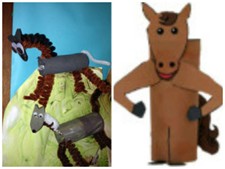 construction paper.
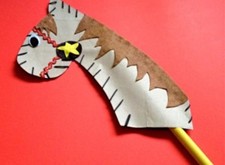 to yardsticks, empty gift wrap rolls, or wooden dowels, etc. Cut two heads from paper or use a paper bag, decorate, add yarn or felt mane, stuff with crumpled paper or not, add wiggle eyes or color them in, staple, add a stick, viola! Now the kids are ready for stick horse races.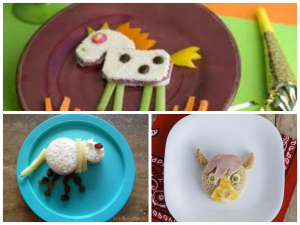
 On March 9, 2025, I shared truths that I had written when I was 62. I shared them again because from 62 to 75, they hadn’t changed. I had lived them, and they were still true. I ended
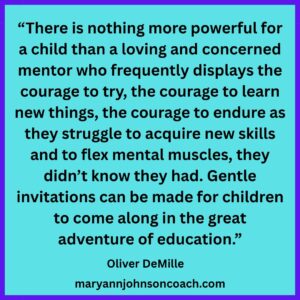 I mentored parents for many years. I enjoyed this work, the friendships I made, and the changes I saw in families. In the early days, I worked with families that were homeschooling. Later, I added parents who educated their children in private and public schools. One of the issues for all parents was how to help children/youth want to learn, enjoy the process, and take responsibility for their learning. No one system insulates parents from this dilemma. I began writing a series of articles titled The Education Adventure. These articles contained real experiences, from real families. Their stories are helpful when working to help children take on the adventure of education.
 I post once a day on my three Facebook sites and Instagram. For the most part, the posts are happy, upbeat, and about family. I do this for my readers, and I also do it as a way of documenting my family. Someday, these posts will be a series of books called 365 Days, 365 Ways to Be a Family.
 Several years ago, I wrote an article about
 In an article I wrote in September 2024, titled