Category: Life Success Principles

Transparency as We Begin 2026

I post once a day on my three Facebook sites and Instagram. For the most part, the posts are happy, upbeat, and about family. I do this for my readers, and I also do it as a way of documenting my family. Someday, these posts will be a series of books called 365 Days, 365 Ways to Be a Family.
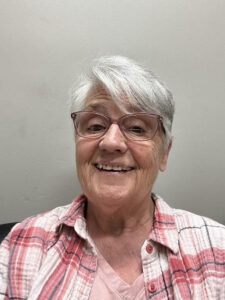
Here is a post I made in September –

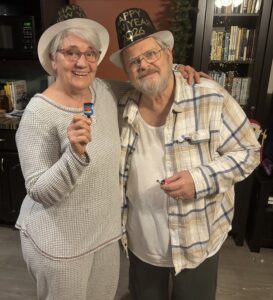
Two Wednesdays ago, August 20th, Don had a right hip replacement. He is recovering well, and it is a relief to have the pain gone. He has suffered for over a year while insurance, etc., was being worked out. This last Wednesday, September 3rd, I had a right hip replacement. Yikes, are we nuts or what? The fun part is that we are exercising together and doing PT together. Makes it a bit more enjoyable. I am only two days out, but I am doing VERY well! Thank goodness.

This elicited a response from an old friend: Hope you both recover quickly! I love how you make the best out of any situation. Kristine A.

Two weeks after this response from Kristine, my life went into the dumpster. I realized that most of what was happening would never be known by my family, followers, readers, and friends. Why? Because I wouldn’t talk about it or post about it. Why?

Almost thirty years ago, I began my journey to accept what God had told me when I still lived in Montana: You’re 100% responsible for your response. You cannot blame circumstances or others for how your life feels. I’ve written about this experience and the fact that it took over ten years to stop being mad about this information and to accept it; five years while still in Montana with a struggling family, and five in Utah, as I worked to understand this truth.

A few years after arriving in Utah, I took a class from Kirk Duncan at Three Key Elements. In that class, we talked about negative energy and how harmful it can be to spill yours onto someone else. They shared healthy ways to deal with negative emotions and experiences, without dumping on others. Then, I took several classes where I began learning that how I perceived a thing, my story, was within my power to control. It was a lot to take in, but I was eager to learn the truth of what I had been told by God and stop fighting against it.

Two weeks after my surgery, when I began struggling, I thought about Kristine’s comment. I was reminded how important it is that those I care about know I’m not perfect, my life is not perfect, I struggle, and I still must work and practice to live true principles.

I’ve thought a lot about this over the last few months, since my surgery, and I decided to share some of what I experienced because it may be valuable to you when things go wrong in your day or life.

It’s imperative to understand that no one’s life is perfect or pain-free, and no one responds well all the time. If we believe this, then we are less likely to compare ourselves to others because we know we do not have the whole story. This is true even of those we are close to.

After my hip surgery, I was told I would recover faster than Don because of my pre-surgery activity. I needed to bottle salsa because we were out, and my surgery was on the 3rd of September. I asked the PA if I could do this before the canning season passed. He said, “You can do anything you have energy for. Your new hip was made to stand on.” I took him at his word. I was going up and down our two steps the day I got home from surgery, doing my regular caregiving things, dozens of times. A couple of days later, I was making salsa. It turned out great.

At the end of week two, I began having deep feelings of discouragement, depression, and anger. I was diligently trying to do what my reader said I was good at, making the best of any situation. I wasn’t succeeding, and I began to struggle with my story. Because Don was pain-free and I wasn’t, I must have hurt my new hip. I was a nitwit to keep up my caregiving routine, cooking, doing laundry, etc., and not spending more time sitting and resting. My husband was incontinent after his surgery, and I had to wash 4-6 pairs of outer pants every day. My mom still had dementia and needed help with everything. I didn’t see any way out. Because I was up and about and looked great, no one realized what was happening in my head.

I couldn’t lie down without pain, so I had to sleep in a borrowed recliner for two weeks. Don was in the other one. I need darkness, and he needs light. I wake at the slightest sound, and he can sleep through anything. I wasn’t getting good sleep at night. I woke up often. I would look at the clock each time and say to myself, “Agggg, I only slept an hour and a half. What’s wrong with me?!” Every day was filled with fatigue, but I am who I am. I would get up and do what needed to be done. It’s my nature, but it added to the mental and emotional stress I was feeling. A full month passed.

Despite not understanding what was happening and feeling so discouraged, I pondered and prayed a lot, searching for information, resources, and solutions. I kept reminding myself that I have control over my story and how my life feels. I knew I needed more information than I had, that I needed help. Experience had taught me these things, and even though I wasn’t managing well, I remembered. I knew I needed to take a step.

I finally did a wise thing and sought support. I talked to my daughter. She had already begun seeing that there was a problem. She has a 19-year-old special needs daughter and three other teens. I didn’t want her to pick up any of my load, but I knew I needed help. She began doing small things whenever she came into our part of the house. She emptied the potty in Mom’s room, put more pants and Depends in the bathroom for Don, filled water glasses, did a load of dishes, etc. She asked me if we would share her evening meal, so I didn’t need to cook three times a day. She’s been sharing dinner with us for three months now, and some days I know it was a lifesaver. Beginning today, January 1, I’m taking it back. I’m ready. : )

Remember those prayers I said and the pondering I did? I was seeking information and resources. A week after taking that small step and talking with Jodie, a resource came. I have a scheduled call with my friend Joy every month. I got brave and told her the facts about where I was mentally and emotionally. She reminded me of a tool I knew about but hadn’t thought to use, tapping for health. I took her advice and put the tapping instructions on the wall across from the toilet. I began tapping every morning while saying my truth statements/affirmations. From the first day, I felt different. I could feel the anxiety, mental fog, and depression lessening.

Joy also mentioned that depression is part of healing and wasn’t happening because I was weak. What!! Could this be true? Here was new information. A light bulb went on, and I felt that what she was saying was true. In that moment, the story that I was a nitwit or had hurt myself caved in.

That same week, I got brave and mentioned how I was feeling with Laurie, the hospice nurse who comes and checks on my mom. She said, “Mary, depression is part of healing. It’s a reminder to rest and breathe. You’re OK, and it will pass.” There was my confirmation of the new information I had gotten from Joy. Laurie also told me that when we’re healing, we wake up at night because it requires energy to heal, and most of our healing occurs at night. So, waking up was also OK. Whew. Now, when I woke up, I would say to myself, “Wow, you’re doing some great healing!” The old story disappeared for good, and a new story took its place!!

Within a few days, I was feeling more myself. Within another month and a half, the fatigue was almost gone, and I could manage much better. I’m now four months out from hip surgery. Don has no hip pain, but I still do, occasionally. I know I haven’t hurt myself or overdone it; it’s just my healing process. I’m staying on top of my story. To solidify my story, when Don’s physical therapist came this last Wednesday, I asked him about it. He laughed and said something like, “You’re so busy. Sometimes your hip reminds you it’s still healing, but you’re OK.”

Here is the point

of this very transparent, vulnerable, and lengthy article – we are all doing our best, but it isn’t always enough. There are times when we need help, more information, and resources.

When I was in trouble, I utilized what I had learned from experience. When you’re struggling, they may help you.

1. Don’t dump your negative stuff on people. If you’re feeling negative, sit in the car and yell. Go outside and hug a tree and dump out all your frustration and anger, all your hurt.
2. Then begin seeking solutions. Take charge of yourself. Be willing to take a small step.
3. Ponder, pray, read, talk to a friend, whatever works for you, and seek information and resources. They are there, but you must take a step to find them. You must move. My first step was talking to Jodie. I wish I had done it in week two and not a full month out. I wouldn’t have sunk so far, suffered so much, and would have made quicker healing progress.
4. Remind yourself you’re in control of your story. If it stinks, take charge and do what you need to, to rewrite it. Stay out of blame, even if you want to blame the young P.A. for his youthful words. : ) You are 100% responsible for your response to whatever is happening.
5. Never judge yourself by what is happening on social media, in your neighborhood, at church, or among your friends. Comparing is always a slippery road to take.

The Truth

I put my best out there because I can help others when I do, but I am not always happy, gentle, cheerful, or in control. I have tough days, and I’m always working on a story of some kind. Just know we are pretty much all alike, succeeding and failing at the same time, and it’s OK. Here’s something I say to myself every morning. It’s one of my truth statements/affirmations: Every day, in every way, I am better and better.

Please know I will always tend toward the positive because I have spent over 30 years learning how to take responsibility for myself and my life, regardless of circumstances or what others do or say. I am practiced at it. Also know that I struggle still. Life has its ups and downs. There’s always something new to experience and figure out. Sometimes I’m successful in an effort, and sometimes I fail. That is life.

I want you to be brave and do what I have done. Practice taking 100% responsibility for you. Forgive others. Forgive yourself. Talk kindly to and about yourself, even when you mess up. Give others and yourself grace. Be patient when you don’t know what to do, even if it takes years to figure out. Remember, it took me ten years to stop raging and another ten to accept that I had 100% responsibility for my response. If you keep pondering, praying, learning, growing, and changing, you will find the resources and information you need.

Let this year be a year of personal growth. Welcome 2026!

When Things Go Wrong

The article I had prepared to post on November 30, 2025, had been published in 2017. My Excel sheet wasn’t as in order as it needed to be. Instead of getting another article ready at the last minute, I wrote a note to my readers and sent it out via the Sunday newsletter. It made an impact, and I got emails. I realized that I had written an article with an important message without even knowing it. So, I’m posting it on the website and recording it. If it helped last Sunday, then it may be of help in the future. So here you go:

When Things Go Wrong

I mentioned last spring that I was in the process of speeding up the transfer of articles from my old website, Home School Coach, to this newer, more universal site. Not all the articles will be rewritten, but most will be. I’ve been working on this project since the new site went up in August of 2017, but I had over 600 articles on the old site. There were always new things to write about, so only a few rewrites made it to the new site. You can see the enormity of the project. : )

I have an Excel sheet that has a link for every article posted from April 2010 until March 2017. When an article has been rewritten, I put the date it was published on the new site, Relationship Transformations for Busy Parents.

A month and a half ago, I sat down to determine what articles I might want to rewrite in November and December. I put them in my blog file with the date I planned to publish them. I was happy about the one I had planned for November 30. It had been published on December 8, 2011, and was titled Easy Christmas Crafts and Gifts for Kids to Make.

Last week, I spent time doing a fabulous rewrite. I knew it would come in handy for busy moms who wanted to help their kids give gifts from the heart. In fact, that was the new title, Giving Gifts From the Heart.

So, What Went Wrong

Last Friday, I did the final edit and put it on the website. I finished the formatting and was ready to do the newsletter. I wanted to see if there were any articles related to the topic that I could link to the article for the 30th. I opened a second window in my current website and searched. WHAT!!! The very article I had spent hours rewriting was already on the new site. It was titled Help Kids Give Christmas From the Heart and had been published on 12/8/19.

I sat there in shock! How did that happen? I knew I had probably been interrupted and never got the date that it was rewritten and published, added to the Excel sheet. Here’s the problem. I work very hard to NOT have any writing to do on Saturday. I never really have a free day, but I try to do my cleaning on Thursday and have my writing finished by Friday, so I don’t have any deadlines on Saturday. Such a bummer.

I am very consistent, and I always do what I say. These are part of my way of being. So what was I going to do? I perused my list of upcoming articles, and there was another great Christmas one I could rewrite on Saturday and keep my commitment. That was my plan.

However, I have been tutored by God this year on several additional ways of being. One is looking at a situation, deciding what matters most, and determining how best to problem-solve. As I worked through my morning routine Saturday, I kept feeling like there was something just as valuable as rewriting an article. Hmmmm. What could that be? After all, I have committed to publishing an article every Sunday at 9 am, and consistency matters.

Here is what ultimately came to my mind. “People want to hear from you, Mary Ann. Sometimes you say something that impacts their lives in a big way. At other times, they smile and are just glad to hear from you. Let this Sunday be one of those days.”

So there it is. You will read the fun Christmas article I had planned for next week, next week. This week, you are hearing from me that I am OK, life is manageable, and that when things go wrong, there is always a solution that is a win-win.

I hope your Thanksgiving was happy and fulfilling. Mine was. I hope that as we enter the coming holiday season, we remember that everything won’t go as planned. Things will go awry, but we don’t need to fall apart. There are workable solutions if we remain calm and think it through. : )

I’ll be back next week,

and the article will be fun!

The Value of Expressing Gratitude

Several years ago, I wrote an article about the importance of gratitude. I’m posting it again because this is the season when we think about expressing gratitude. However, I hope it helps you take some daily actions that move you to think about what you are grateful for every day.
The Turbo Pickle

When I had seven children, I had a green car the kids dubbed “The Turbo Pickle”. It had several dents and was very old. When we drove around a corner, someone had to hold the door, or it would fly open. My teenagers made me let them out a block from school. I had gone several years without a car, while Don was an over-the-road salesman. This car seemed like a gift, and I felt real joy in owning it. It was a blessing to us that my children didn’t always recognise. My life felt very abundant because we had it. I like to think that I was living the words of Frank A. Clark. “If a fellow isn’t thankful for what he’s got, he isn’t likely to be thankful for what he’s going to get.”

I was able to feel this abundance because early in the year, I had gone on a quest to find prosperity. I had read about it in the scriptures, and I knew that it was a gift of the heart, not a manifestation that came from outward circumstances. I had prayed that, despite our challenging financial circumstances, I would understand and experience prosperity. A miracle occurred. Although our income didn’t change at all, I felt very prosperous for several years. I never worried about having bread or milk. I knew it would come, and it always did. This was a magnificent experience that I cherish to this day. My experiment with the idea of prosperity made some very lean years feel abundant and comfortable.

Some things are an inside job – prosperity, happiness, peace, and gratitude, to name a few. They happen in the heart and are not ruled by what happens in life; these gifts of the heart make life wonderful and worth living. We must want them, ask for them, and do what is required to change ourselves, to receive them. If we’re sincere in our desire, this magnificent change of heart will come, and we will see with new eyes.

Lately, I’ve been seeking a greater sense of gratitude. I’ve asked for more of this gift of the heart. I’ve been reading about gratitude and practicing expressing it. I write in my gratitude journal, I express gratitude to others, and in prayer, say “Thank You” when I receive. I want gratitude to be a more natural part of how I am.

Gratitude dispels fear. It can lessen sorrow, worry, depression, grief, anger, and loss. This quote rings true to me: “There is no such thing as gratitude unexpressed. If it’s unexpressed, it’s plain, old-fashioned ingratitude.” Robert Brault

This Sunday I am grateful for:

1. Those who read what I write and let me know that it matters to them.
2. Seven remarkable children who grew into amazing adults, despite the inadequacies of their parents, and gifted us sixteen grandchildren.
3. An unexpected mission in life (caregiving for my mother, husband, and helping with my granddaughter) and for the challenges that it brings. Because of them, I am becoming more.
4. My sweetheart, who, despite his health issues, still hugs me and tells me I am beautiful
5. My Savior Jesus Christ and my Heavenly Father. They make ALL the difference in my life.

As you prepare for Thanksgiving Week, think about all the ways you have been blessed, despite any challenges you face. When you do this, you will find that you have experienced miracles, grace, friendship, and found ways to serve.

Rejoice over these gifts.

We Can’t Stop Our Lives, But We Can Invite Others In

In an article I wrote in September 2024, titled The Five-Year Lesson, I detailed how I transitioned from not nurturing relationships to consistently engaging in them. In the latter half of 2025, I’ve experienced the wisdom of that five-year lesson. I’m glad I listened to God and myself and took some challenging steps, even though it seemed like just another thing on my very full plate.
For Example

In 2024 and the first half of 2025, I walked three days a week with my friends Livia and Alysia. At that time, we were able to select specific days and a time that worked for all of us. Then we consistently showed up. I was surprised to find it so uplifting to my spirits. Then, at the end of July, Livia crashed on her bike. We walked a couple of times after that, but she discovered she had fractured her ankle and had bad sprains in her legs and hands. She had to take a break. Alysia and I walked a few times, but Don had hand surgery and then hip surgery, and Alysia’s child with type 1 diabetes needed more night and morning care. We found it difficult to maintain our routine. Then, on Sept 3, I had a hip replacement. The walking was done for all of us.

As Livia and I healed, and Alysia’s son’s diabetes became more manageable, school began again. Livia and Alysia were caught in a huge pile of kid stuff that hadn’t been a consideration the year before. For example, Livia’s son is a drummer in the marching band. She drove him to practice every weekday and then spent from early morning until late Saturday evening at competitions. We realized that to connect consistently (not just texting), we would have to manage in a new way. What could we do?

Here’s What Happened

Two weeks ago, Livia contacted me. She had an appointment cancellation and wondered if she could walk (yes, walk) to my home for a short 30-minute visit. Then she had another appointment. We wouldn’t be home from Don’s doctor’s appointment till noon, and the hospice nurse was coming at 1:30. I said, “Yes, come. We’ll fit it in.”

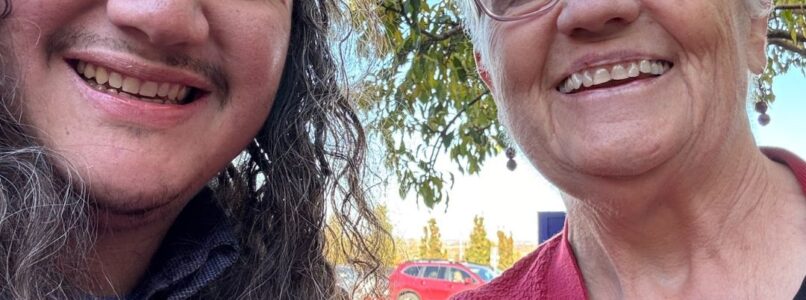
When Livia arrived, I was preparing a quick lunch before the nurse came. She stepped in and helped me fix the food. We talked and laughed. I invited her to eat. She confessed she had quickly downed some salad before hightailing it to my house, was still hungry, and would love to. As we sat at the table eating together, it was wonderful. We laughed. It felt like old times, and even though we had crammed it into a small space in our day, we ENJOYED it. We stepped outside and took a photo to remember the day.

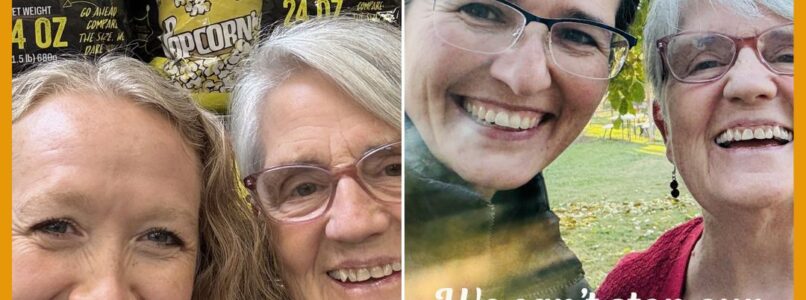
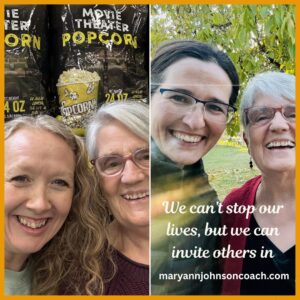
Two days later, I was walking in the aisles of Smith’s Market Place, laughing and talking with Alysia. We had 30 minutes together. It was fun, there was plenty of light, the bakery smelled delicious, and it was warm. No wind. LOL We were able to catch up. It was a relief for both of us to talk with someone who listened, smiled, and let us hold our feelings. We began the walk with a big hug and ended it the same way. We stopped in front of a popcorn display and took a photo, again, to remember the day. Then I finished shopping.

In both cases, it wasn’t what we were used to. No path, trees, birds, sun, privacy, and we had to squeeze it in between other appointments. However, as Alysia said at one point, “We can’t stop our lives, but we can invite others in.” These encounters make a difference in our mental, emotional, and physical health. So, we’re fitting each other into our daily stuff the best we can. Nurtured friendships are worth the time and effort they take.

When Livia left after lunch, she said, “Let’s set another time, or you know we won’t do it.” How right she is, and as Alysia said, while we walked the grocery store aisles, “We can’t stop our lives, but we can invite others in.” Today, Saturday, Alysia and I walked at 2. I almost cancelled becuase of family stuff. I’m glad I didn’t, as it was her birthday. Next week, band competitions will be finished, and Livia will join us at 9 or 10. We’re still working it out. We will continue to connect in these simple and still consistent ways.

For now, this is where we are, and it’s working.

What it Looks Like to ‘See’ Another and Why It Matters

This week, I had an experience that brought to mind the importance of letting our kids know, daily, that we see them and that they matter. It brought back many memories of families I have worked with, parents I have mentored, and the huge impact I’ve seen when moms and dads learn to ‘see’ their kids during the mundane moments of every day.
A universal human need is to matter, especially to those we love. We can all satisfy this need for others, especially in our families, in simple ways. When our children or others we cross paths with feel seen, it builds confidence and strengthens a sense of self-worth. It brings moments of joy. But what does it mean to see someone? I experienced this kind of ‘seeing’ this week.

MY EXPERIENCE

Don takes radiation treatments, and so for almost six weeks, we will be at the hospital every weekday morning. When we arrive, we pull into the valet parking lane, I get Don’s walker out, help my mom, and then we make our way into the hospital while someone parks our car. When we’re finished, we get our keys, and a sweet valet volunteer takes them and heads out to retrieve our car.

The night before this experience, we had our first frost. The next morning, leaves were falling like rain from all the trees. When we returned for our car, the valet lane was filled with leaves, and a young man was blowing them out of the road onto the lawn. However, there were so many cars that he had to keep stopping and waiting. They parked our car in the lane that is usually reserved for those who are loaded and ready to leave. Again, he had to stop. He didn’t seem frustrated, which amazed me. When we got to our car, I turned towards him, smiled, and said, “I’m sorry you have to wait for us.” He returned my smile and responded with, “That’s Ok. Not a problem.” Then I busied myself getting Mom and the walker into the car. As I prepared to enter our vehicle, I heard this young man holler, “You have a good day!” What? I turned, smiled, and told him to do the same. He had kept us in his sight for a few extra minutes so he could wish us well as we drove off. I can tell you, I felt seen.

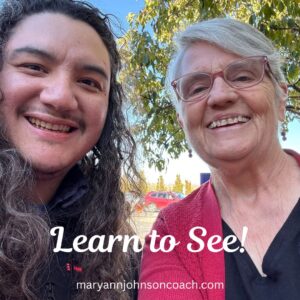
This experience touched me so much that I did a U-turn and went back. I parked and walked to where he was. I told him that I appreciated his taking notice. I told him I was a writer and wanted to share this experience with my readers because when we ‘see’ each other, it matters. He was willing to let me take a picture of us. He was all smiles and told me I was special. I could tell from his face that he felt special, too.

Can you see the simplicity of this moment and its value? This is what can and needs to happen in families multiple times a day. 

How can that be done?

It requires that we take time as we move through our day to ‘see’ our children. If possible, say goodbye at the door when they leave. Smile and say, “Glad you’re home,” when they return. Touch an arm and smile as you pass in the hall. No words needed. Pat the back of a child doing the dishes or folding laundry, then go on your way. Give a word of encouragement and a smile to someone doing their homework. Look in a bedroom door of someone cleaning their room and smile encouragement or say, “You’re doing a good job.” If your child is sitting on the couch watching TV, sit by them, pat a knee, and smile. Then get up and go. Rub a back while sitting at church or while waiting at an appointment. The list goes on. This works even with teens.

IT’S A PRACTICE

Each of these interactions takes less than a minute and can be done all day long if we understand their value. It isn’t just about being nice. It isn’t about being a parent. It’s about letting another person know that they’re seen and that they matter.

This is a practice. The more you do it, the better you get and the more seen your kids feel.

Five Principles of Power – Principles 3 and 4

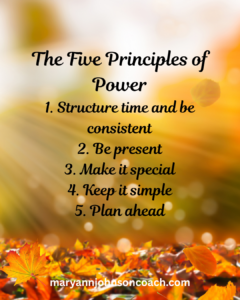
Recently, I wrote about principles that I consider powerful for a healthier and happier family life. Last week, we delved into principles one and two. Today, I will share information and examples on principles three and four.

As I said last week, as you internalize these principles, you will see greater success in all parts of your life. This is a promise I can make based on my own experience.

Principle 3

Make it special. When we want someone to look forward to something, we make it special. We do this at weddings, birthdays, and on holidays. But it’s just as important in our daily family activities. Let me share an example from my own life.

I recall a trip we made from Idaho to Utah. We were moving, and Mom was driving us to meet our dad at the new home. She had all nine of her kids in the car. My two sisters and I were in the very back of our station wagon. (No seatbelts in those days.). I was fourteen, Cindy was 13, and Shirley was twelve. Old enough to behave, right? At one point, we were so bored that we began fighting. My mom yelled repeatedly from the driver’s seat for us to stop because we were riling up the other kids. After a lengthy time, Mom pulled over, raced to the back of the car, popped the window open, and reached for us. We, however, were scrunched up at the back of the middle seat, and she couldn’t reach us. She told us in no uncertain terms to stop fighting and remain calm, that we were almost there. Then she got back in the driver’s seat. I will never forget what happened next. I looked at my sisters, they looked at me, we smiled mischievously, and went at it again. I know, we were being naughty on purpose, but we were bored!

I learned something from that experience that helped me when I traveled with our seven kids: make it special! I learned even more as I watched my husband. Don knew how to do this well. On any trip he planned, he would insert one or two stops at city parks. Everyone got out for fifteen minutes, and then we hit the road. At first, this drove me nuts. I mean, we needed to get where we were going. Over time, I saw how helpful this was for our children. They loved our trips and looked forward to the short stops. Don knew how to make it special.

I had a different way of accomplishing this. I would make goodie bags and hand them out at the beginning of the trip. They contained homemade treats and cheap toys or books from the dollar store. In our day, that was the town drug store. : ) Sometimes, rather than a goodie bag, I would have a bin of books, games, cards, coloring materials, etc. that I kept just for road trips. They weren’t brought out at any other time. We also had a few car games, and we often sang as a family. Yes, my kids liked that. Here is the key – what isn’t always available is special when it is available.

This idea of making it special applies to many things, such as going to church, doing chores, or bedtime. Really? Yes. I have a special bag that goes to church with me. When the grands are reverent, they get to pick a treat out of the bag. I’ve been using this bag for over ten years, and although all the grands are now teens and don’t need the bag to be reverent, they enjoy getting it anyway. It’s become a once-a-week tradition. : ) Maybe you have special books that are only used at church. Whatever isn’t always available feels special.

Even chores can be made special. After Saturday chores, have a simple treat. As each child or teen finishes their assigned items, they can have a treat, no waiting on others. You could have a ten-minute dance party just before everyone goes off to do chores or even gather when everyone is done. Laughter, smiles, and treats can make even the most arduous or mundane thing special.

And what about bedtime? I’ve learned that even bedtime can be more stress-free when it’s special. My grands in Washington were notorious for not going to bed, and when in bed, calling out over and over again. When I visited, I instituted something special. I would sit by the bed and ask two questions: What was the hardest thing that happened today? What was the best thing that happened today? They would each get to answer the question, and we talked about it. They loved this. When we were done, each was to lie still, close their eyes, and breathe. I would sit there for another ten minutes while they complied. By then, they were usually asleep.

Another simple way to make bedtime special is by giving each child just three minutes to hug, cuddle, or talk. Then say goodnight and move to the next bed or room. I’ve had parents tell me that doing this one simple thing has made a difference for their kids because it makes bedtime special.

Principle 4

Keep it simple. As in the above examples, while working on making things special, we need to remember to keep it simple. When we make things hard, expensive, time-consuming, or too costly, the activity usually dies a slow death. We had a weekly family night. There was prayer, a story, and a simple activity. We ended with a treat of some kind. This was a family activity suggested by our church. As we went along, many members of our congregation began making this simple family home evening a big deal. Bigger treats. More challenging activities. More resources were required. I found myself letting it slide because I didn’t have the time or energy for all the preparation. I felt that if I wasn’t doing all the ‘stuff’ other families were doing, my kids would feel ours was lame. What was lame was that we stopped doing a fun thing that brought our family together. Eventually, we returned to simpler content, and it returned to a weekly event.

Here is a cool idea a friend had for her children’s bookshelves. She would periodically remove books and add in books that had been removed months earlier. This kept her children’s interest in the books because they felt new. She wasn’t constantly having to buy books or go to the library. This also got her kids to engage with books that they ordinarily wouldn’t have read. It helped make their family reading time more exciting.

Sometimes you’ll have an activity that you think is special, but your kids don’t, and it isn’t as successful as you hoped. That is OK. Get your ego out of the way. Try another activity next week or new items in the car for the next long drive. Be willing to experiment.

I did some work for a woman who taught me a profound lesson. Her closet was so neat, and I asked her how she managed it. She replied that if she bought something, then she had to give something away. This simple ‘rule’ that she had for herself kept her whole home in far better order. She had learned to keep it simple.

We can expand this idea to many areas of our lives. Take a vacation, for example. Don’t overload it. A few activities, well thought out and engaged in, beat a schedule that wears everyone out and leads to misbehaving, irritation, and contention.

When we add a new commitment to our calendar, we should remove something else. One of the great tragedies for families is that we are so “booked” that we do not have time for one another; we cannot enjoy one another. Running from one thing to the next until we are totally worn out is a good way to miss our family life, which is really the life we want. When we keep things simple and consistent, our results skyrocket.

We want to have a real connection in our family. We want peace and calm as often as we can manage it. We want activities that bond us together.

This all happens best as we make things special in simple and sustainable ways.

A Series of Conversations – The Dissolution of a Story

As I’ve mentioned before, there’s a story that has caused me grief. I’ve worked on rewriting it, but it continues to morph as I move into my 9th year of caregiving. Despite the work I’ve done and the changes I’ve made, it still rears its ugly head and causes negative emotions. When it does, I take immediate control and look at how the story has changed. It’s annoying and sometimes exhausting to rework an old story, but this one has been particularly tough. I suspect that’s because, as a caregiver, I live a life that makes it easy for the story to creep in.


Originally, it was, “There’s no room in my life for me.” Then it morphed to, “I’m constantly interrupted, and I never get my own stuff done.” There have been other iterations. As I said, a toughie.

The Most Recent Version

Here it is: “Everything, even if good and for my benefit, is just one more thing on my plate.” Can you see how it has jumped from one thought to another, but is basically the same? This version of that old story isn’t any healthier and makes caring for my family harder on some days. I continued to pray for help. The goal was to explode it into pieces so it wouldn’t keep morphing itself. : )

Disengaging 

Four years ago, I began feeling a push from God to develop a community outside of the one I enjoyed once a week at church. I wasn’t happy with that thought. I mean, the story was there. Even if it was good for me, it would just be one more thing to manage in my packed life. Sigh!

However, I listened to God and myself, and I knew it was wise. It took a couple of years for me to move, but move I eventually did. I called my friend, Linda. We had been friends and spoke on the phone almost every day for over twenty years while I lived in Laurel, Montana. We decided to make it a consistent call and set a date for every three months. After each call, we would schedule another appointment three months out. We both knew from experience that if we didn’t set aside time and honor it, it wouldn’t happen. We had only spoken every two or three years for the twenty-five-plus years I had been in Utah. This principle of setting a time and honoring it is true everywhere, including connecting with our children.

After that first step, other names came to mind, and I would make a call and set up a three-month appointment. I now have seven friends I connect with regularly. One of those friends, Anne, after a couple of calls, asked me if we could meet for lunch every three months and visit face-to-face. Oh, my word, I don’t do lunch, and we would each need to drive 30 minutes to meet. But we set it up and have managed for several years now. One of those seven friends and I talk every month. I’m getting better, right? : )

A year ago, I began walking with two friends several times a week. We’ve been darn consistent considering they are both still parenting and I’m caregiving. I truly enjoy these walks.

However, here’s the thing. Despite following wise counsel from God and myself, before each call, meeting, lunch, or walk, I would have this thought, “Why are you doing this. You don’t have time. This is nuts!”

At the end of each connection, whether on the phone, a walk, or lunch, I felt rested. Freer somehow. I had laughed, smiled, joked, and sometimes cried. It was liberating. It was stress-relieving. It made me feel bad that I had negative thoughts before each event, even though I experienced good results and felt better afterwards.

My RED-LETTER Day

July 25th was a red-letter day for me. What’s a red-letter day? A day that is pleasantly noteworthy or memorable. I had my scheduled walk with Alysia and Livia. That morning, I felt tired, and staying in bed another fifteen minutes would have felt good. But I realized I was looking forward to this walk. I didn’t think. “Augh, if I didn’t have this walk scheduled, I could rest another fifteen minutes. Why do I do this stuff?” No, what I thought was, “I’m glad to have a reason to get up. I want to hear about Livia’s event and how Alysia’s kids are doing.” What an amazing turnaround.

On the walk, I mentioned that I had a call coming up later that day with Joy, someone we all know. Alysia asked if I was looking forward to it. (She knows the struggle I’ve had with the story because we’re honest and have real conversations.) I stopped walking for a moment to check in with myself and realized I was anticipating the call with gladness. I was happy my walking buddy asked the question because it helped me take notice of the shift.

In my afternoon conversation with Joy, my morning experience came up. We were talking about the value and importance of having a community. Joy had mentioned that community is what increases our prosperity – not with money, but emotionally, mentally, spiritually, and in services rendered. We are more prosperous when we have friends who care, and whom we care for.

In that moment, I realized fully what I had begun to sense earlier that morning. There had been a shift! I began feeling anticipation before a call, a walk, or a lunch for several weeks. I wanted to be present with that person. It no longer felt like just another thing on my very full plate. The story, at least for now, has retreated. It may rear its ugly head in the future, but now I have evidence it’s false! It will be easier to send the story packing!

The New Story

Here is the new story: “God knows my needs. He knew the truth, that I would flourish in a community of friends, even though I didn’t know it. Now I do, and I am moving forward. Engaging in my community makes space for all that matters.  Every day, in every way, I am getting better and better.” I am still working on it, but it is coming along. I repeat it daily.

It can take time to rewrite an unhealthy or unhelpful story, but when we recognise a story that is damaging or harmful, we can change it. It’s happening for me, and it’s wonderfully freeing. It can happen for you. When you recognise that you’re telling yourself something that isn’t helpful or is untrue, don’t berate yourself. Celebrate. When you can see it, you can change it, even if it takes time.

I’ve worked on this story for eight years,
and I am succeeding! : )

A Series of Conversations – Step Out of the Trench and See the Sunset

A few days before my 54th anniversary, May 28th, I spoke to my good friend, Joy. I had been down with bronchitis for three weeks. I was challenged to keep up with caregiving and was feeling down, not at all like myself.


The 100 Wants List

At the time, I was reading the book Master Your Mindpower. I haven’t finished it yet because it gives you assignments. It isn’t a fast read, but very interesting. One exercise was to make a list of 100 things you would like to see happen in your life. I didn’t know if that was possible. Caregiving requires a lot of time and emotional and mental energy. I had given up my former life as a speaker and writer to care for my family. I felt like I didn’t have any current goals or dreams. What few there were were hazy and far in the future. And I would be older, and then what could I really do? I was also challenged because I am at a place in my life where I am paring down, I don’t want more things.

Joy and I are alike, and so she understands how crossing things off my daily list is satisfying to me, but neither of us wants to spend the rest of our lives just crossing the mundane off a list. We both want goals and dreams. Joy knows what hers are and is bringing them to fruition with a house full of teens and young adults, but I was stumped. I know I’m a powerful and positive force for good, but after this long illness, I felt like quitting. I had this thought rolling around in my weary brain, “Who cares what you say anyway?” See, no matter how much you know, you can still visit the cellar. How long you stay there is what matters.:) Talking with Joy helped me climb the stairs to the light!

She reminded me that I am in the Impact phase of my life, and that’s why I feel some dissatisfaction. I have a beautiful mission statement, and I know that caring for my family matters. But it gets old. You know what I am talking about. This dilemma doesn’t go away just because your kids grow up.

A Beautiful Statement!

Joy listened to my concerns about the list and then thoughtfully said, “Being in the trenches can be gray, bland, and boring. It matters and is important, but we need something to light our light. We need to get out of the trench for a moment and see the sunset.” That was an amazing statement. My daughter Jodie, who has four teens, one with severe cerebral palsy, and works full time, stops each evening, goes outside, sits in a chair, and watches the sunset.

I took Joy’s beautiful statement to heart. It helped me work out a stinky story I was working on. I knew it was an untrue story and that I needed to rewrite it, but I wasn’t sure how. Here was the story – “I’m caregiving. I don’t know how long I’ll be doing that. Therefore, I can’t make plans. I do not have any current dreams or goals.” As I said, stinky! But Joy’s comment moved me forward. I began my list.

I wanted to see if I could do it. I haven’t reached 100 things, but I am up to 66. This isn’t bad for a 75-year-old who didn’t think she had any dreams or goals. I was amazed and happy with myself.

Want or Desire?

Not long after talking with Joy, I had a call with my friend Mary Black. The list came up again. She shared an interesting thought with me, which she read in the book A Happy Pocket Full of Money by David Cameron Gikandi. Gikandi begins his book with quantum physics and then teaches about infinite wealth and abundance through giving and fulfilling our purpose in life.

One chapter is titled Want Not. Desire, But Never Want. He defined the word want from the dictionary– “to be without. To lack, to be destitute or needy. A defect of character, of fault, to be absent, to be deficient or lacking.” He said if you’re in a state of wanting, you never get what you want. He suggested removing this word from our vocabulary and instead inserting desire or intend, depending on the situation. I changed my 100 Wants list to 100 Desires.

According to the book Master Your Mindpower, the next step is to narrow the list down to the top 10 you want to achieve in the next 12 months, and then the top 3 to do in 30 days. Because many items on my list are about changing my way of being, and I’ve been working on some of them for years, you can’t set a timeline, like 30 days or a year. Others, such as travel, are on hold while I care for those who can’t travel. But some I can move on now, and I will contemplate what to do. I don’t know how this is going to play out for me yet.

Here is what I do know – making the list was eye-opening and freeing. I am alive. I have desires and goals. They were there all the time; I just needed to let them out. This list has buoyed me up. I look at it and add to it. It makes me happy.

This exercise may help you, too if you’re surrounded by littles or teens, have a demanding, all-consuming job, a debilitating illness, etc. Sometimes it can feel like we have no life. Making this list showed me that I do, and can help you see the same, no matter your current circumstances.

Here are 25 things from my list:

• Lose the TONE and speak lovingly and kindly.
• Have extra and to spare so I can share.
Remain calm, even when triggered.
• Care for Don, Mom, and help with Maggie as long as needed.
• Think of others even when it isn’t convenient.
• Find moments of happiness every day.
• Get my right hip replaced.
• Get better every day, in every way.
• Study something every day and incorporate the good I learn.
• Have $10,000 in savings.
• Feel good about and work well with money.
• End each day satisfied that I did my best, even if it didn’t match my daily worksheet.
• Continue to increase/nurture relationships with other women for a coming day of need.
• Speak Spanish.
• Take painting lessons.
• Dance, any kind my hip can manage.
• Write a second book.
• Visit Maine.
• Go to Missouri and see Jenny and her homestead.
• Finish my study of all 2200 scriptures about Christ in the scriptures.
• Feel happiness, the kind that isn’t about satisfaction because of work well done.
• Go to California and spend a week with Andrew’s family.
• Go to Washington and spend a week with Kate and her family.
• Attend a church service at Gracewoods, in Missouri
• Take a trip to see Marie and her family soon.

As you can see, there aren’t many ‘things’ on the list, and many are changes in my way of being. At this juncture in my life, that’s where my desires lie: becoming better every day, in every way. This is a truth statement I repeat out loud daily.

The things on my list of desires matter to me, and I have time to accomplish them in my life. Some are restricted for now, like going to Maine, but many have nothing to do with time; more to do with intention and choice.

I’m interested to see how many I cross off before I die. Knowing me and how much I love crossing things off my list, I suspect it will be all of them. : )

Making this list of desires and looking at it every day helps me step out of the trench for a moment and see the sunset. It has made a difference.

Ahh, working on the list – Find moments of happiness every day!

A Series of Conversations – Learning by Doing

Remember that monthly call I have with my friend Joy Petty? We had another invigorating conversation I want to share. I’m no expert on this topic, but I have had experience with it. Joy is an expert.

Learning by doing is a powerful way to teach children. When they experience something new or exciting, it’s an effective way to absorb information and to learn. This can be helpful for those who learn best by doing rather than reading or hearing. We all have kids who learn in different ways. I love reading, but I’m also a hands-on learner who needs repetition.

What Kid Loves Shakespeare?

I’ll be honest, I never got Shakespeare. I took a class in my senior year, and we read Shakespeare and talked about it. I was as in the dark as before I took the class. A few years later, I saw the movie Romeo and Juliet, and my dislike for Shakespeare faded somewhat. I could understand more of what was happening. Reading Shakespeare wasn’t all that helpful to me, even though I am a reader at heart. (Joy would say that’s because Shakespeare is meant to be seen and heard!)

For the last 10 years, Joy has been mentoring youth through project-based learning experiences (with what she learned from LEMI, Leadership Education Mentoring Institute). These projects incorporate multiple kinds of hands-on learning. The first project was called Shakespeare Conquest, where her students became familiar with Shakespeare through many immersive experiences, including reading, watching, and listening to dozens of plays, giving presentations on Shakespearean life, and participating in a Shakespeare play at the end of the year. Trying to read and memorize Shakespeare’s lines was challenging, and some of them didn’t think they could do it. But through all the weeks of practice, they learned to speak the Shakespearean language and enjoyed it so much that they’ve put on a Shakespeare play almost every year since.

Joy’s own experience was similar to the kids. Before her training and preparation to teach the Shakespeare Conquest class, she wasn’t very familiar with Shakespeare, and didn’t see the point in spending so much time on it. She didn’t have the time or energy to care about Shakespeare until she began the project. As she immersed herself in it, she was better able to help the youth learn their lines and understand what they were saying. Only when she experienced it herself could she begin to understand how much we learn about human nature, as well as how much cultural literacy we gain from Shakespeare.

This was Joy’s experience with the kids she worked with. They didn’t care about Shakespeare until they began to learn the lines and perform them on stage. Being immersed in the story made ALL the difference.

In her work with kids, Joy helps them participate in simulations. It is a safe way to learn.
For example, when they were learning about the Civil War, they had a battle with Nerf guns. But one side didn’t have as many bullets as the other, and their supplies (the nerf bullets they needed to keep fighting) ran out much more quickly. They got a first-hand idea of how men would feel as they fought in battles without the necessary supplies. They had a greater appreciation as they studied the stories because they had experienced not having all the supplies they needed to win.

At one point while learning about the Revolutionary War, the students each stood in a bucket of ice water. They were talking about the winter and how many soldiers had frostbitten feet and hands. Their appreciation for what these men, and some women, went through as they fought for America’s independence grew exponentially.

For the past several years, Joy has put on a Youth Experience Summit, a four-day summer youth event called YES Week. The point of the event is to give the youth a safe space to learn through simulations/immersive learning. The YES Week website talks about why:

Learning Is In the Doing

“Simulations can provide learners with hands-on experiences, allowing them to actively engage with and better retain what they learn. In simulations, learning happens through experience. By immersing students in realistic scenarios, they have the opportunity to explore, experiment, and make decisions in a safe environment.”

“Simulations help learning stick. Research in education has shown that 70% of information retention comes from direct experience, which is why simulations are so effective. Students actively participate in problem-solving, critical thinking, and decision-making, leading to a deeper, more meaningful learning experience.”

“Simulations offer a safe space for mistakes. The process of making and reflecting on mistakes is crucial for deep learning, and simulations provide an opportunity to do so without real-world consequences. This encourages students to take risks and explore different solutions without being afraid to fail.”

Immersive Learning Doesn’t Just Apply to Shakespeare and History

Often, our kids miss these experiential/immersive types of learning. One reason is that we live in perilous times, and parents want their kids to stay safe. But we can offer them ways to have real experiences with what life is going to be like in safe ways. We can plant a garden and have them help put food on the table, literally. We can take them on trips to meet people unlike themselves, eat different kinds of foods, and experience different cultures. We can attend other churches. I did this in my junior year with my parents’ blessing and learned why I held the beliefs I did. We can help them participate in a sport that is new to them. My parents helped me try skiing. I knew it wasn’t for me because I had tried it. LOL

You can watch all the cooking shows you want, but to really understand and love cooking, you eventually must cook. You can watch others ride bikes for years, and you may enjoy it, but to feel the exhilaration of riding, you have to ride. When we experience what we want to know about and understand, through simulations or immersive learning experiences, we gain a depth of knowledge we might otherwise miss.

Understanding Money Management Through Immersive Learning

Let me share one way my daughter has allowed her children to have an immersive learning experience. Three of her kids are now 13, 15, and 17. A few years ago, she opened a bank account for each of them and got them a debit card. They talked about how debit cards are used and the consequences of misusing them. Then she stood back. Yes, they did overdraw, and when they got their weekly money, they had to use it to pay the bill. That hurt.

Here is what has happened in the last 3 years or so. Jack, who is 17, took a job feeding a neighbor’s horses twice a week. He wanted money in his account and access to his debit card. An allowance wasn’t cutting it, and after a short time, he could see the necessity of getting a job. He still feeds the horses, but now has a second job at a pizza parlor also.

Mary, who is 15, is carefully considering starting a nail business. She loves doing people’s nails, has lots of friends, and wants more money in her account. She has been using her money to purchase what she needs to do this work, and she practices. She did nails at our family reunion two weeks ago. She is careful with how she uses her debit card (her money) because she has a goal in mind.

Ben, who is 13, is still pondering his options. But it all began with experimental learning – what does it take to have and use a bank account and debit card? Just this week, he came and asked me if I had any jobs he could do. He needed to earn $15 for something he wanted. I gave him a job, paid him, and he deposited the money in his account. Then he was able to use his card to buy the item.

Immersed in Learning the Value of Preparation

When Don and I had six of our seven children, we wanted them to have an immersive learning opportunity with the idea of preparing ahead. They wondered why we had so many items in our garage that we didn’t use. Money was tight, and wouldn’t it be better spent on a new shirt or a pair of shoes, or how about a gallon of milk? They wondered why we had a propane stove, why we spent money on food storage for the future, why we had a port-a-potty, why they had to help in the garden, why I canned in the fall, and they had to help, and on and on. Don and I wanted them to experience why we did what we did as a family.

We decided to spend a full day and night pretending we had no electricity or water. Imagine that with 6 children. The port-a-potty was well used day and night. LOL. We cooked on the camp stove. Ok, that was not as fun as when we went camping, and we did get a better stove later. However, I was glad I wasn’t cooking on an open fire! LOL. It was late fall when we chose to have this learning experience, so they were all glad we had a propane heater. The only drawback was that Don and I didn’t know how to use it. We all got cold before we finally figured it out.

The next year, there was far less complaining about snapping beans in the fall, weeding the garden, being asked to manage money wisely, etc. They had experienced the value of what we were doing as a family, preparing for the unexpected.

Sewing and Immersive Learning

Here is another cool example of immersive learning. My friend Livia’s son got involved in theater at his school. He worked on sets and learned to sew and patch things. One day, he found a hole in his backpack. Because he had learned to sew while helping in the theater group, he fixed it and kept using it. He was proud of that backpack. Now, he will fix things even if he could buy something new.

Learning by doing, being immersed in the learning, is a powerful way for us to help our children move into a more prepared adulthood. Don’t be afraid to let them experiment in safe ways.

President Thomas S. Monson, a man I admire, explained: “God left the world unfinished for men and women to work their skill upon. He left the electricity in the cloud, the oil in the earth. He left the rivers unbridged, the forests unfelled, and the cities unbuilt. God gives to us the challenge of raw materials, not the ease of finished things. He leaves the pictures unpainted and the music unsung and the problems unsolved, that might know the joys and glories of creation.”

I loved this quote. It illustrates why we teach kids to ‘do’ Shakespeare, to experience money management and the need for work, the value of preparation for what may come, and how to make do because you know how, etc.

This summer, I’ve been rewriting and posting old articles from the days when I spent time helping my grands with immersive learning. You know the ones; they are called Learning Play. They fit in this category of immersive learning perfectly because when you experience something, it stays with you, and the learning can be fun.

Be creative and find ways to immerse your children in learning and preparing for life and adulthood.

A Series of Conversations – Do You Need a Reminder to SMILE

How Can You Remind Yourself to Care for Self?

On my daily worksheet, I have ‘smile’ in the section titled Care for Self. Yup, I must remind myself to check in and see if I have made the effort to smile during some of my busy and often chaotic days. Sorta sounds like your days, doesn’t it, as you wrangle littles or manage teens? : ) Recently, I had a conversation with my friend, Livia. She has an alarm set on her phone that reminds her to smile. Whew, I am not so weird.

The truth is, we need prompts to remind us to do the things that often get left behind in the business of the day. These are like mini systems. I use a daily worksheet, and Livia uses an alarm. It doesn’t matter how you set up your mini system, as long as it works for you.

I do have a few alarms set on my phone to remind me about important things. You know, the things that trump laundry, shopping, cleaning, cooking, and so forth. Here are a few of mine: phone a family member, care for the dog, make sure Don took his meds, etc. I also have things on my daily worksheet I want to remember: read, be alone, even if it’s only for five minutes, sing, take a walk, pray, read my truth statements aloud, study, and so forth. I don’t get everything crossed off every day, but the goal is to cross off enough so that I have fed my soul, as I have cared for others.

I use my daily worksheet, Livia uses alarms on her phone, and some people put notes on the bathroom mirror or over the kitchen sink. All these mini systems help us remember to care for ourselves in simple ways. These mini systems help us be more consistent, and consistency yields better results. As you can see from my worksheet and phone alarms, there isn’t anything big on the list. They’re all simple. Small in their scope, but big in accumulated results.

During the coming week, think about the simple, daily things that would bring you inner peace and outer joy. Then find a way to prompt yourself to get them done.

It will help you be healthy, remain more positive, feel less resentment, have greater energy, and feel successful at the end of the day.