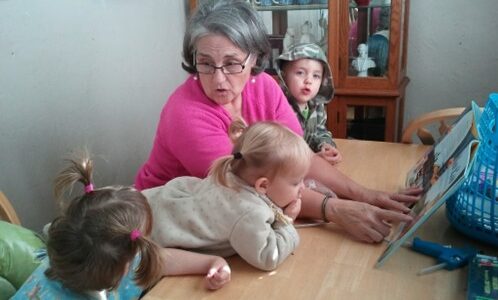
 One day in 2011, I found the most amazing book at the library!!! I happened across it accidentally. It was about Leonardo Da Vinci and the amazing visions he had. But that wasn’t all. The book showed how, in time, all his inventive ideas were created by other people and who those people were. Oh my gosh, I wanted to share this with my grands.
However, it was a book with lots of words and way over their heads. I pondered what to do. My daughter suggested I help them understand what an invention is. Voila, a perfect solution to my dilemma. So that’s what I did.
The Creation Box
We had so much fun. I took my creation box, a cardboard box that I collect junk in – plastic ware, Styrofoam cups, old keys, buttons, wiggly eyes, toilet paper tubes, paper towel tubes, paper clips, popsicle sticks, washers, Styrofoam balls and cones, yarn, whatever comes my way that would otherwise be thrown out. I mean, a grandma (or mom) can use this sort of thing. : )
I began by asking Jack if he knew what an invention was. He said he thought it was a place to go. I told them that an invention was an idea in someone’s head that was then turned into something real. I suggested we look at some inventions. We looked at the pictures in the Leonardo Da Vinci book. I worried they would be bored because it was a bit over their heads, but they loved it! We examined the old drawings and how the actual invention appeared after it was created. I shared that Leonardo had people making his inventions move and work, but that the real inventions used electricity and motors.
Interested in Inventions
We looked at pictures of old TV sets and Philo Farnsworth, the inventor of television. The kids couldn’t believe how different they looked today, and Jack was enthralled with the name Philo. We looked at a book about the Day-Glo brothers and the brilliant paint colors they invented.
The children were excited about all these wonderful inventions. Then I asked them if they would like to make an invention. Oh my, then they were very excited. We sorted through all the items scattered on the table from the creation box and began putting them together. I had brought the hot glue gun with me because I knew, as little as they are, that regular glue wouldn’t work. Because of the ages of my grands, I had to do all the gluing.
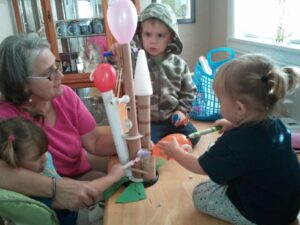 Our Super-duper Rocket-propelled Robot
We blew up balloons first because they wanted balloons on their invention. When we began, they didn’t have an idea of what we were making, but as we worked, they finally decided we were creating a robot.
Jack’s “All Alone” Invention
The best part of the day was when a light went on in Jack’s brain. He saw the Styrofoam cone and a long tube. He put the cone on top of the tube and realized he had made a rocket. He was so excited about his own “all alone” invention.
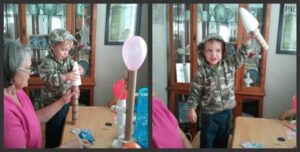
We glued the rocket to our robot. Now we had a rocket-powered robot. It was a fun learning day, and they will remember what an invention is and that they may grow up and invent something themselves.
If you have older children, it would be wonderful to do this project and then study one new inventor each week or month, for the whole summer. There are all kinds of experiments, projects, and crafts that you can do to demonstrate and mimic what the inventors did. Get your older kids off technology and get them thinking. It will improve their summer. : )
Books About Inventions For Kids
- The Day-Glo Brothers by Chris Barton
- Neo Leo by Gene Barretta
- The Boy Who Invented TV by Kathleen Krull
- So You Want To Be An Inventor? By Judith St. George – A wonderful book about the traits of inventors, some of which aren’t valued, like daydreaming. : )
- Now & Ben: The Modern Inventions of Benjamin Franklin by Gene Barretta
- The Kid Who Invented the Popsicle: And Other Surprising Stories about Inventions by Don L. Wulffson
- Brainstorm! The Stories of Twenty American Kid Inventors by Tom Tucker
- Kids Inventing! A Handbook for Young Inventors by Susan Casey
- Girls Think of Everything: Stories of Ingenious Inventions by Women by Catherine Thimmesh
- The Kids’ Invention Book (Kids’ Ventures) by Arlene Erlbach
Inventions Made by Kids
Back in 2011, Allan Chu, 17 years old, invented a way to speed up the Internet! He was tired of how slow it could be, so he took matters into his own hands. He invented an algorithm that compresses data and allows information on the internet to be presented much more quickly. An algorithm is a step-by-step mathematical procedure that solves a problem, especially by a computer. Allan entered a math, science, and technology competition and won first place and $3,000! Quite an accomplishment for such a young person!
If you have ever thought about inventing something yourself, you don’t need to be a math and science genius to devise something clever. Have you ever heard of a Popsicle? Well, in 1905, an 11-year-old boy named Frank Epperson invented it. He accidentally left his favorite fruit drink with a stirrer in it outside on the porch overnight. When he awoke, the drink was frozen, and he found a delicious new treat. He went on to patent his idea and is the creator of the Popsicle, Fudgsicle, Creamsicle, and Dreamsicle!
 Summer is the perfect time to learn about stars because after you do a few fun activities, you can lie under the stars as a family, breathe the air, and stare into the night sky. What a relaxing thing to do. As I said a few weeks ago, this summer I am sharing some old grandma school times I had with my grands back in 2011. Bigger kids like helping younger ones, so even though these are simple things, you can do them as a family and get the older kids involved. Just don’t pick a Friday or Saturday night. : )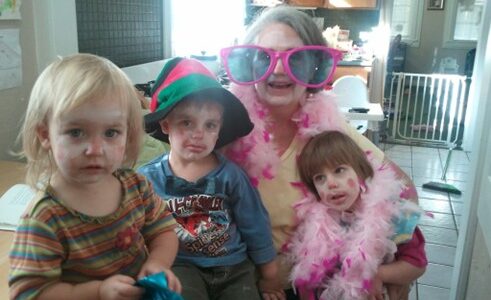
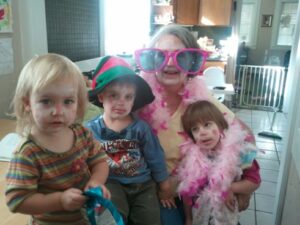
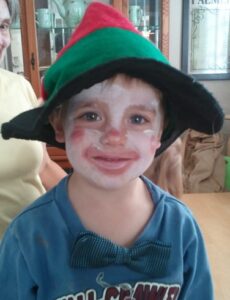 white face paint and lipstick. The white face paint was Halloween makeup I bought many years ago. It worked well enough. For red, we used what grandma had, lipstick. As I say, keep it simple. Then we tried on all the glasses, boas, ties, and other costume items. Jack fell in love with a hat and a bow tie. He asked me if he could have them. I said he could surely borrow them. “I don’t like borrow” he said, “I want to have them!” LOL
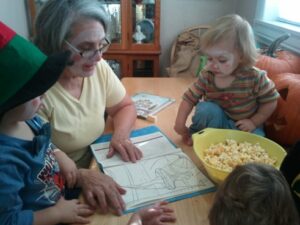 sometimes we aren’t! We managed with what we had, and I made a circus book. I found a terrific site of circus pictures, printed them off, and put them into a binder. (Jack, Mary, and Maggie used it until it fell apart.) It also made a great circus coloring book.
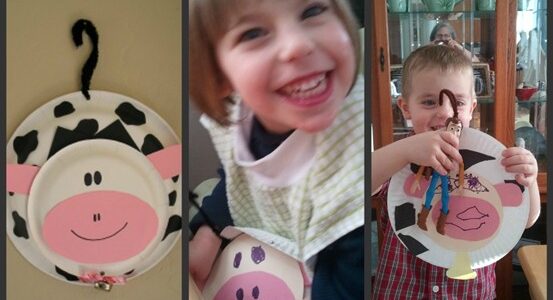
 When I first began writing and publishing articles, it was in 2010. My grands, the ones I still live with, were all under five. As their grandma, I wanted to find ways to play and connect. I’m not a board game person! Tea parties and dress up are not on my list of fun things! The truth is, I like learning. I always have. I thought a lot about how I could ‘play’ with my grands and make it work for all of us. What I came up with was learning for fun. Every Tuesday, for several years, we would gather and play/learn. They looked forward to it and occasionally would tell me what they wanted to know or ask about at our next Tuesday session. It was a hit and was called Grandma School. : )
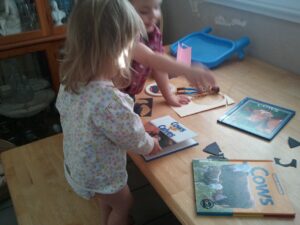 the pictures and I told them fun cow facts, such as, “Did you know a cow has four stomachs. You only have one, but a cow has four!!” That type of comment is usually followed by a question such as “Why Grandma?” Then we get to learn a bit more. Jack’s favorite cow fact was: “Daddy cows are called bulls and they go Moo really, really loud.” I did such a great daddy cow impersonation that it sent Jack into gales of laughter.
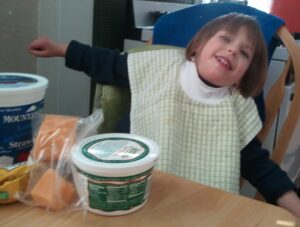 After the books, we did a cow activity. I had created a picture sheet on my computer that showed cool foods that are made from cow’s milk: cheese, cream, ice cream, milk for cereal, cottage cheese, sour cream, etc. I also had the real item on the table, if we had it. We looked at the pictures, talked about each item, and then tasted it. Of course, we all liked the cookie dough best. (It has milk in it!)
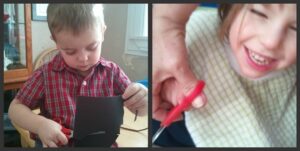 way, but then switched to using two hands and having me hold and turn the paper. Special scissors with 4 finger holes allowed me to help Maggie cut her own cow spots. She was thrilled. (Remember, Maggie, who is now eighteen, has severe cerebral palsy, so doing anything with help thrilled her and still does.)
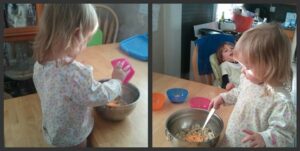 We ended the day by making mac and cheese. Cooking was a favorite activity, so everyone helped. The kids liked tasting the powdered cheese. We had our mac and cheese for lunch, and it was delicious. Maggie, Jack, and Mary decided that having cows in our world is a very good thing.
 I have learned from lived experience that simple systems are usually the solution to difficult problems in time and life management. This was not an easy lesson to learn, and I occasionally still ignore this truth, but when I do,
 In 2011 I wrote a three-part series of articles about a principle that helps families manage better. I must confess it’s a principle I still work on because it isn’t easy to keep. I know the stories and the principle are worth repeating because principles never change and when lived, they impact us for good. I’m compiling the three-part series into one article. That will keep it simple for you. LOL
 I have a short list of thoughts/ideas I’m pondering. This list keeps important objectives at the front of my mind lest I forget. : )
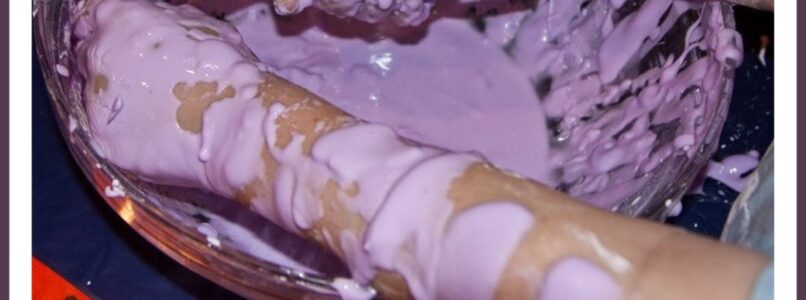
 Thirteen years ago, I had a wonderful evening with my eight-year-old friend, Hailey. It was successful because time had been set apart for the activity, it happened consistently so Hailey could count on it, and I was present. When we want to solidify relationships in our family these three ingredients make all the difference.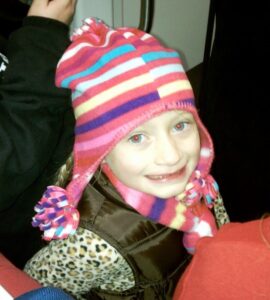
 Two weeks ago, I shared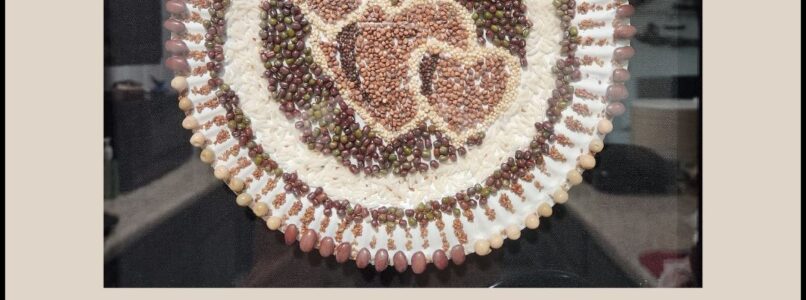
 Last week
 nine.
nine.