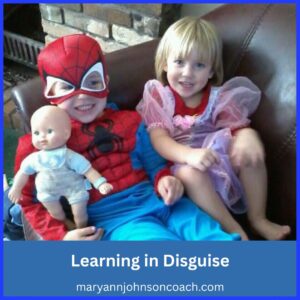
 A friend of mine, a mom with several young children, told me recently that her kids’ favorite thing to do is play dress-up. They want to do it all day long, even the boys. Of course, it makes a glorious mess. As we visited, she asked me about the value of this interest she was seeing in her kids, and it opened up a wonderful conversation.
The ideas we talked about are primarily for children under eleven, but don’t close the door on your teens just yet. I have found that when families incorporate a younger child’s interests into a shared activity, older kids will often join in too. Secretly, many of them miss being kids. So read on and think about how this might bring your family together, whatever ages you’re working with.
Play Is the Gateway
Children between the ages of one and twelve are in what is called the Age of Exploration. They want to experiment with everything physically and mentally, and dress-up play is one of the most natural expressions of that impulse. What looks like simple make-believe is actually children trying on the world — testing out who they might be, what history might have felt like, what it means to be someone else entirely.
And here is the beautiful opportunity for families: if you are present, even a little, while the costumes are coming out, you can weave in stories and information that children will carry with them for years. Not as a lesson. Not as school. Just as a story told by someone they love, while everyone is playing together. That combination — your presence, their imagination, a great story is a powerful thing.
Ideas to Try
You can share stories of past kings and queens as your children dress up as royalty. You can talk about a historical era and let them act out the characters. Some periods of history are especially rich for this kind of story-play: explorers like Lewis and Clark, scientists like Marie Curie and Albert Einstein, or even a beloved ancestor whose story deserves to be remembered. Tell a short story, then let them become the character. The learning that happens this way tends to stick because it was fun, it was shared, and you were there.
You don’t need an elaborate costume collection for any of this. Some families have a box of dress-up clothes, and that’s wonderful. But what I used with my grandchildren was a large box of fabric squares and scarves. Fabric and scarves leave everything to the imagination, and children are endlessly creative when given the freedom to invent. I have seen teens come up with remarkable ideas and then turn around and help their younger siblings bring those ideas to life. You would be amazed at what can happen when you simply provide the materials and step back.
Weaving It Into Family Life
If your family has a reading time together, that is a natural place to bring in a little dress-up magic. When you are reading a fiction book, stop at an exciting moment in the chapter and act it out. Use your box of fabric squares. You don’t need to do this every time you read together, but every now and again it adds a spark of fun that everyone remembers. This is another place where teens, given the chance, will often surprise you by jumping in to help the younger ones.
If a dedicated dress-up activity doesn’t feel right for your family, there are smaller ways to bring the same spirit in. Tell an interesting story about a historical figure or an ancestor at dinner, and let your littles act it out when the meal is done. Read together as a family, and then when finished, let the younger kids play out what they heard. The idea is simply this: mix their natural love of play with a story worth telling, and learning happens almost without anyone noticing.
From One Family Who Tried It
My friend decided to experiment with some of these ideas, and here is what she shared with me afterward:
“Thank you, Mary Ann! I tried this today. We are reading The Wizard of Oz. Of course, they all wanted to be Dorothy, but eventually they settled on at least one scarecrow. One of the Dorothys wanted to have a Greek-style costume, so she made up a side story to go with that. Thanks for a great idea — it will be fun to use for future reading too!” Sarah
Play and learn. That’s how children do it best. Don’t be afraid to mix their natural love of make-believe with your inspiration and your stories.